
Table of Contents
- Why Conflict Resolution Matters for Leadership Credibility
- How to Lead Difficult Conversations: A Structured Framework
- Conflict Resolution Scripts for Managers: Real Scenarios
- Examples of Workplace Conflict Resolution in Action
- Building Psychological Safety to Prevent Conflict
- Remote and Hybrid Conflict Resolution: Special Considerations
- Post-Conflict Restoration: Rebuilding Team Cohesion
- Frequently Asked Questions
Last Updated: August 21, 2026
Why Conflict Resolution Matters for Leadership Credibility
Leaders who dodge difficult conversations lose respect fast. Your team watches how you handle tension, and that shapes whether they trust you with bigger problems. Strong workplace conflict resolution strategies aren’t optional, they’re foundational to your credibility.
When conflict festers, it spreads through team dynamics like a hairline fracture in a foundation (peer-reviewed research). People take sides, productivity drops, and psychological safety evaporates. The cost is measurable in missed deadlines, higher turnover, and reduced collaboration (apa.org).
Most leaders lack a structured approach to navigate conflict. Many default to either avoidance or escalation, both fail. What separates effective leaders from struggling ones is having a clear framework to identify root causes, facilitate perspective taking, and move teams toward genuine agreement.
This guide covers the frameworks, scripts, and approaches that work in real workplace situations. You’ll learn how to prepare for difficult conversations, execute them with active listening and emotional intelligence, and restore team cohesion afterward.
How to Lead Difficult Conversations: A Structured Framework
The most effective approach divides into three phases: preparation, execution, and resolution.
Preparation: Identify Root Cause and Set Clear Boundaries
Before sitting down with anyone, you need clarity on what’s actually happening. Start by mapping the conflict: What are the observable facts? Who is involved? What specific behaviors triggered concern? Avoid assumptions about intent.
Next, identify the root cause. Surface disagreements usually mask deeper issues. Two people arguing about a deadline might actually be struggling with unclear roles or broken trust. If you address only the surface argument, the same conflict resurfaces in different forms.
Set clear boundaries for the conversation before it starts. What’s the scope? What decisions can you make, and what requires escalation? What’s non-negotiable, and where is there room for negotiation?

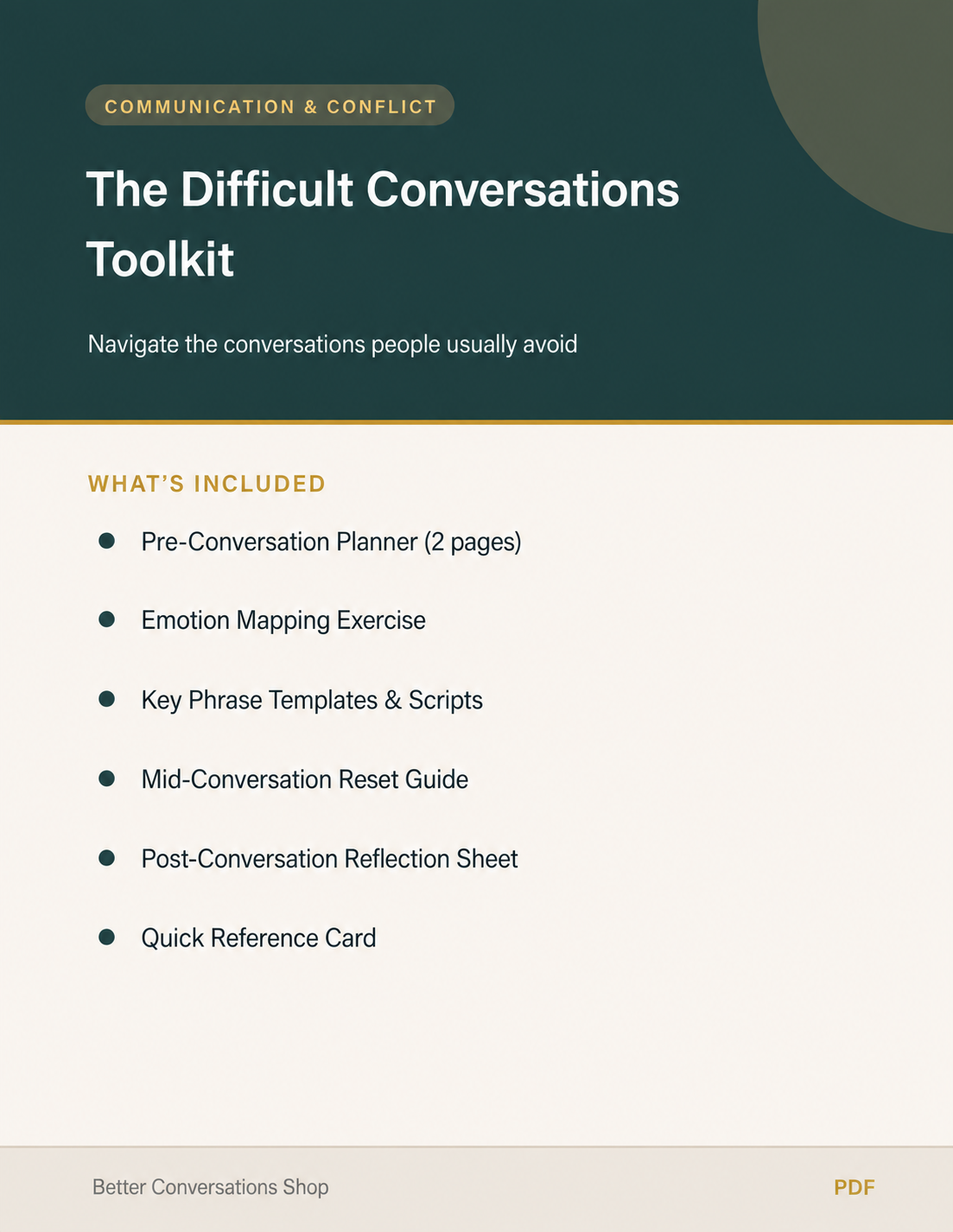
The Method Lab’s Difficult Conversations Toolkit helps leaders prepare through stakeholder mapping and emotion assessment.
Execution: Active Listening and Perspective Taking
Your job during the conversation is to understand, not to convince.
Active listening means hearing what’s actually being said, not planning your response. It means asking clarifying questions and noticing non-verbal cues, tone shifts, body language changes, hesitations. When someone says they’re “fine with the decision” but their shoulders tense, that’s information you need.
Perspective taking goes deeper. It’s understanding why someone said something, not just what they said. What matters to them? What are they protecting? People rarely fight about the stated issue; they fight because something feels threatened, their autonomy, competence, fairness, or belonging.
Ask open-ended questions: “Help me understand what’s important to you here” or “What would need to happen for this to feel resolved?” Then listen without immediately countering.
Emotional intelligence is critical here. You must manage your own emotional response while staying present to someone else’s. If you’re defensive or dismissive, the conversation shuts down. If you’re genuinely curious and non-judgmental, people open up.
Resolution: Moving from Problem to Agreement
The goal is to move from competing positions to shared understanding and concrete next steps.
Reflect back what you’ve heard: “It sounds like you’re concerned about X because Y matters to you. Is that right?” This confirms understanding and shows respect, even if you don’t fully agree.
Then move toward problem-solving. What’s the actual problem you’re trying to solve together? Frame it as collaborative: “Here’s what I’m thinking. What would work for you?” Look for solutions that address the core concern, not just the surface complaint.
End with specificity. What happens next? Who does what by when? How will you know if this is working? Vague agreements evaporate. Concrete agreements stick.
Conflict Resolution Scripts for Managers: Real Scenarios
Script 1: Addressing Performance Impact Without Blame
Opening: “I wanted to talk about something I’ve noticed. Over the last three weeks, the X project has slipped by five days. I know you care about quality, so I’m wondering what’s going on from your perspective.”
Listen. Don’t interrupt. If they deflect, stay curious: “That makes sense. What’s making this project specifically harder right now?”
Name the impact: “When deadlines shift, it creates a ripple for the rest of the team. Sarah can’t start her phase, and it pushes our launch timeline. I need to understand what’s getting in the way so we can problem-solve together.”
Move to solutions: “What would help you get back on track? Do you need support? Do we need to adjust the scope? What’s realistic?”
Close with clarity: “Here’s what I’m hearing. You need [X] to move forward. I can help with that. I also need to see momentum by [specific date]. Let’s check in on [day].”
Script 2: De-Escalating Emotional Reactions
Acknowledge without agreeing: “I can see this is frustrating for you. I want to understand what’s behind it.”
Don’t match the emotion. Stay calm. Speak slightly more slowly. Lower your voice.
Name the pattern: “I notice we keep coming back to this same point. That tells me something important is at stake for you. What am I missing?”
Create safety: “I’m not here to prove you wrong or punish you. I’m trying to understand what happened and figure out how to move forward in a way that works for both of us.”
Pause if needed: “I think we both need a moment here. Let’s take 10 minutes and come back to this.”
Script 3: Facilitating Agreement Between Opposing Parties
Set the frame: “I know you two see this differently. What I need from both of you today is to help me understand each perspective fully, then we’ll work on finding a path forward that addresses the core concerns.”
Get both sides heard: Ask each person to explain their position without interruption. Then ask the other person to reflect back what they heard.
Find common ground: “Here’s what I’m hearing you both care about: delivering quality work and maintaining trust. You disagree on how to get there. Is that fair?” Usually, core values align even when methods don’t.
Explore options: “What if we tried [option]? What would work? What wouldn’t?” Generate options together.
Build the agreement: “So here’s what we’re going to do. [Specific action]. You’ll know it’s working when [measurable indicator]. We’ll check in on [date].”
Examples of Workplace Conflict Resolution in Action
A software team had a senior engineer (Marcus) and a newer team member (Alex) in constant tension. Marcus felt Alex wasn’t thinking through implications before coding. Alex felt Marcus was micromanaging. The tension was poisoning the team’s psychological safety.
The manager (Jennifer) identified the root cause: Marcus valued thoroughness; Alex valued speed and autonomy. Neither was wrong, their work styles were colliding without a clear decision-making process.
In the conversation, Jennifer acknowledged what each brought: “Marcus, your attention to edge cases has prevented major bugs. Alex, your ability to move quickly keeps us from analysis paralysis. The problem is you’re not aligned on how decisions get made.”
She asked each to explain their perspective. Marcus described his fear of technical debt. Alex described his frustration with feeling controlled. Jennifer reflected back the real issue: they needed a clear process for when to move fast and when to slow down.
Together, they created a framework: for routine updates, Alex moved forward independently. For architectural or security changes, they paired and decided together. Two weeks later, the tension had shifted because they had a process that honored both perspectives.
Building Psychological Safety to Prevent Conflict
The best conflict resolution strategy is preventing unnecessary conflict. That requires psychological safety, the belief that you can take interpersonal risks without fear of punishment or humiliation.
When psychological safety is high, people raise concerns early, ask questions instead of making assumptions, admit mistakes, and collaborate instead of competing (peer-reviewed research).
Create psychological safety through consistent actions. Acknowledge when you’re wrong. Ask for input and use it. Respond to bad news with curiosity, not blame. Show genuine interest in perspectives, even when they disagree with you. Follow through on commitments.
Most importantly, respond to vulnerability with respect. When someone takes a risk, admitting confusion, asking for help, raising a concern, how you respond teaches everyone else whether it’s safe to do the same.
Remote and Hybrid Conflict Resolution: Special Considerations
Conflict in remote and hybrid settings has a different texture. You can’t read the room. Tone gets misinterpreted in Slack. Misunderstandings compound faster.

The same frameworks apply, but execution changes. Video conversations work better than email for anything emotionally charged. You need more explicit communication because you can’t rely on context clues. You need to over-communicate decisions and reasoning.
In remote settings, perception becomes reality faster. If someone feels excluded or dismissed, they don’t have informal moments to reset the relationship. You must be more intentional about rebuilding connection after conflict.
Schedule video conversations instead of resolving conflict asynchronously. Start with a human moment before diving into the issue. Document agreements in writing and share them so everyone has the same reference point.
Post-Conflict Restoration: Rebuilding Team Cohesion
After resolving significant conflict, invest in restoration. Create moments where people can re-establish connection and trust.
Check in individually with people involved, not to rehash the conflict, but to understand how they’re feeling and what they need to move forward. Sometimes people need acknowledgment. Sometimes they need to know the conflict won’t resurface.
Create early wins together. Give involved parties a project where they can succeed collaboratively. Small wins rebuild trust faster than time alone.
Be explicit about what you’re doing: “I know the last few weeks were rough. I want to make sure we’re moving forward as a team. I’m noticing [positive thing], and I want to make sure we keep building on that.”
Watch for lingering patterns. If you see old dynamics starting, name it early: “I noticed some tension in that meeting. Is that something we need to address?”
Conflict resolution is a core leadership capability that determines whether your team functions as a cohesive unit or fragments under pressure. Leaders who develop structured approaches to difficult conversations build teams that trust them, stay longer, and perform better.
The frameworks in this guide work because they honor both the human element (emotions, perspectives, needs) and the structural element (clear processes, specific agreements, follow-through). You don’t have to choose between being empathetic and being decisive. You can be both with a framework that helps you balance them.
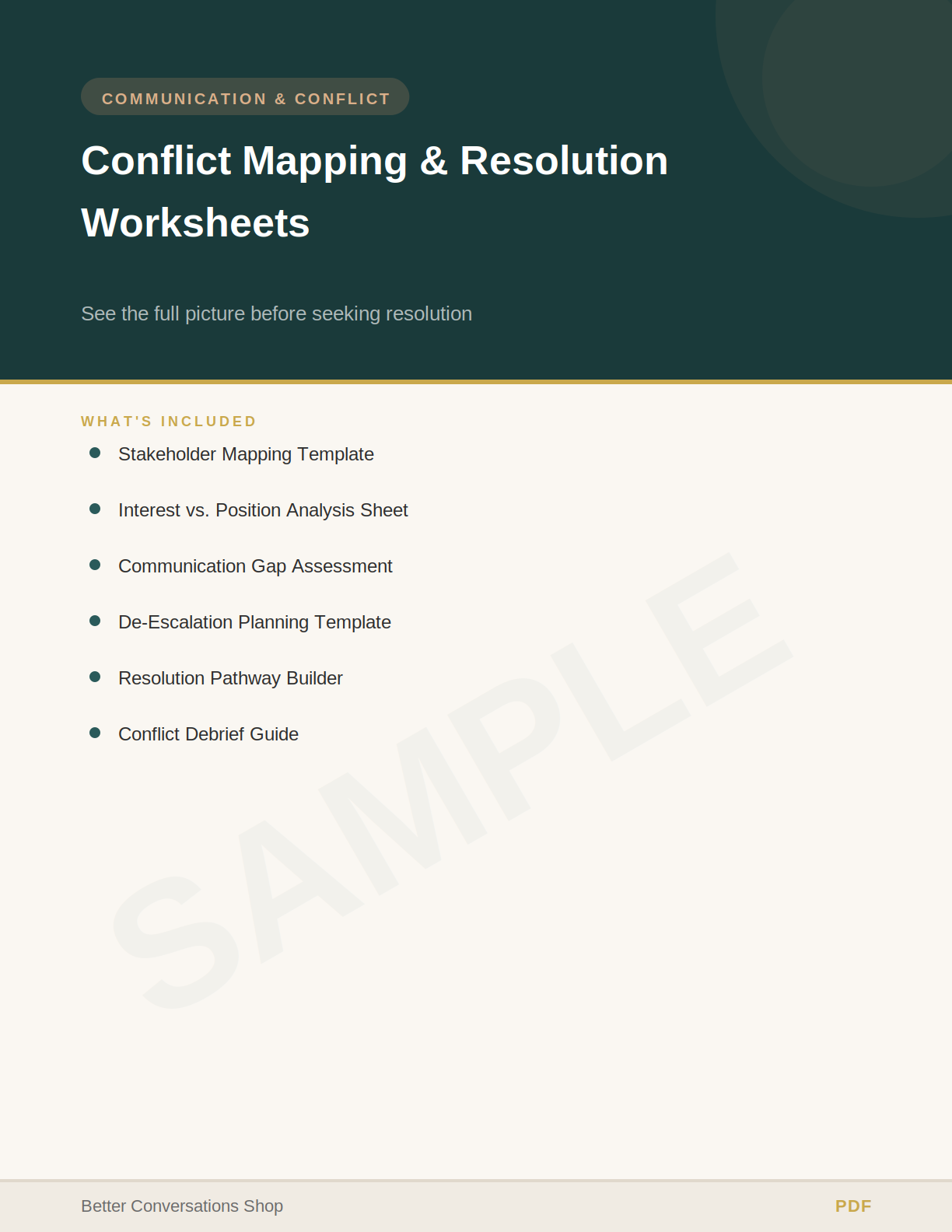
Get your free toolkit from The Method Lab and access conversation guides, conflict mapping worksheets, and team dynamics assessments designed to help you navigate difficult conversations with confidence. Build credibility through structured, thoughtful conflict resolution strategies for leaders.
=== FAQ ANSWERS (audit these too, same rules) ===
[1] Q: What are the most effective conflict resolution strategies for managers? A: The most effective strategies combine active listening, root cause analysis, and neutral facilitation. Start by understanding each party’s perspective before proposing solutions. Set clear boundaries about acceptable behavior, then focus on the problem rather than personalities. Use constructive feedback to address the issue while maintaining respect. Finally, follow up after resolution to ensure the agreement holds and rebuild team cohesion. This approach builds trust and prevents similar conflicts from recurring.
[2] Q: How do you identify the root cause of workplace conflict? A: Ask clarifying questions about when the conflict started, what triggered it, and what each party needs to move forward. Look beyond the surface complaint, often the stated issue masks deeper concerns about resources, recognition, or respect. Use tools like stakeholder mapping to understand interpersonal dynamics and power structures. Document the facts separately from emotions. This analytical approach reveals whether the conflict stems from miscommunication, competing priorities, unclear roles, or personality clashes, allowing you to address the actual problem.
[3] Q: What’s the difference between conflict management and conflict resolution? A: Conflict management means controlling or minimizing the negative effects of conflict while it exists, setting boundaries, enforcing rules, or separating parties. Conflict resolution goes deeper: it addresses root causes and creates lasting agreement between parties. Management is reactive; resolution is proactive and restorative. As a leader, your goal should be resolution when possible, which rebuilds relationships and team performance. Management may be necessary in the short term, but resolution prevents future conflicts and strengthens workplace culture.
[4] Q: When should a leader intervene in team conflict? A: Intervene immediately if conflict affects work output, safety, or team morale. Act early if you notice tension escalating, communication breaking down, or one party withdrawing. Don’t wait for conflict to resolve itself, it rarely does without leadership. However, allow team members to attempt resolution first if the issue is minor and doesn’t impact performance. Your role is to create conditions for resolution, not to control the outcome. Intervene with a neutral stance, asking questions rather than imposing solutions, to build accountability and buy-in.
Frequently Asked Questions
What are the most effective conflict resolution strategies for managers?
The most effective strategies combine active listening, root cause analysis, and neutral facilitation. Start by understanding each party’s perspective before proposing solutions. Set clear boundaries about acceptable behavior, then focus on the problem rather than personalities. Use constructive feedback to address the issue while maintaining respect. Finally, follow up after resolution to ensure the agreement holds and rebuild team cohesion. This approach builds trust and prevents similar conflicts from recurring.
How do you identify the root cause of workplace conflict?
Ask clarifying questions about when the conflict started, what triggered it, and what each party needs to move forward. Look beyond the surface complaint—often the stated issue masks deeper concerns about resources, recognition, or respect. Use tools like stakeholder mapping to understand interpersonal dynamics and power structures. Document the facts separately from emotions. This analytical approach reveals whether the conflict stems from miscommunication, competing priorities, unclear roles, or personality clashes, allowing you to address the actual problem.
What’s the difference between conflict management and conflict resolution?
Conflict management means controlling or minimizing the negative effects of conflict while it exists—setting boundaries, enforcing rules, or separating parties. Conflict resolution goes deeper: it addresses root causes and creates lasting agreement between parties. Management is reactive; resolution is proactive and restorative. As a leader, your goal should be resolution when possible, which rebuilds relationships and team performance. Management may be necessary in the short term, but resolution prevents future conflicts and strengthens workplace culture.
When should a leader intervene in team conflict?
Intervene immediately if conflict affects work output, safety, or team morale. Act early if you notice tension escalating, communication breaking down, or one party withdrawing. Don’t wait for conflict to resolve itself—it rarely does without leadership. However, allow team members to attempt resolution first if the issue is minor and doesn’t impact performance. Your role is to create conditions for resolution, not to control the outcome. Intervene with a neutral stance, asking questions rather than imposing solutions, to build accountability and buy-in.