
Table of Contents
- Why Structured Frameworks Matter for Difficult Team Meetings
- Define Your Meeting Objectives and Ground Rules for Difficult Topics
- The Five-Step Root Cause Analysis Framework
- Scripts for Difficult Team Conversations That Build Trust
- How to Facilitate Conflict in Team Meetings Without Shutting Down Dialogue
- Templates for Managing Team Friction and Moving to Resolution
- Remote and Hybrid Considerations for Structured Difficult Conversations
- Post-Meeting Follow-Up and Accountability
- Frequently Asked Questions
Last Updated: August 19, 2026
Why Structured Frameworks Matter for Difficult Team Meetings
Difficult team meetings derail organizations. A conversation meant to solve a problem spirals into defensiveness, trust erodes, and the real issue never gets addressed. The difference between meetings that heal and meetings that harm comes down to structure. Without it, emotions hijack the conversation. With it, teams move through conflict toward actual resolution.

Structured frameworks aren’t about controlling people or forcing artificial civility. They create conditions where hard conversations happen without people feeling attacked or unheard. When a team knows the meeting has a clear purpose, ground rules, and a path to resolution, they listen better and take more ownership of their part in the problem.
Many leaders skip this step, assuming that if the problem is important enough, people will naturally communicate well. That assumption costs them. Without structure, even smart, well-intentioned people revert to defensive patterns: interrupting, making assumptions about intent, and protecting their reputation instead of solving the problem.
Structured frameworks can lead to measurable changes: conversations that ended in frustration can move toward clarity, teams stuck for weeks can find resolution in a single meeting, and trust can improve after difficult conversations instead of being damaged by them.
Define Your Meeting Objectives and Ground Rules for Difficult Topics
Before sending the calendar invite, know what you’re actually trying to accomplish. A meeting objective isn’t “discuss the conflict.” It’s specific: “Understand what led to the missed deadline and agree on how we prevent it next time.” The specificity signals that this conversation has a purpose beyond venting frustration.
Ground rules protect the space. A few that work across contexts:
- Assume good intent, but address impact. People usually aren’t trying to hurt each other, but impact matters regardless of intent.
- One conversation at a time. Don’t relitigate three other conflicts. Pick one issue and see it through.
- No character attacks. Critique the behavior or decision, not the person.
- What’s said here stays here. People won’t be honest if they think you’ll repeat their words to others.
Write these down and review them at the start of the meeting. It takes two minutes and shifts the entire tenor. People relax when they know the boundaries.
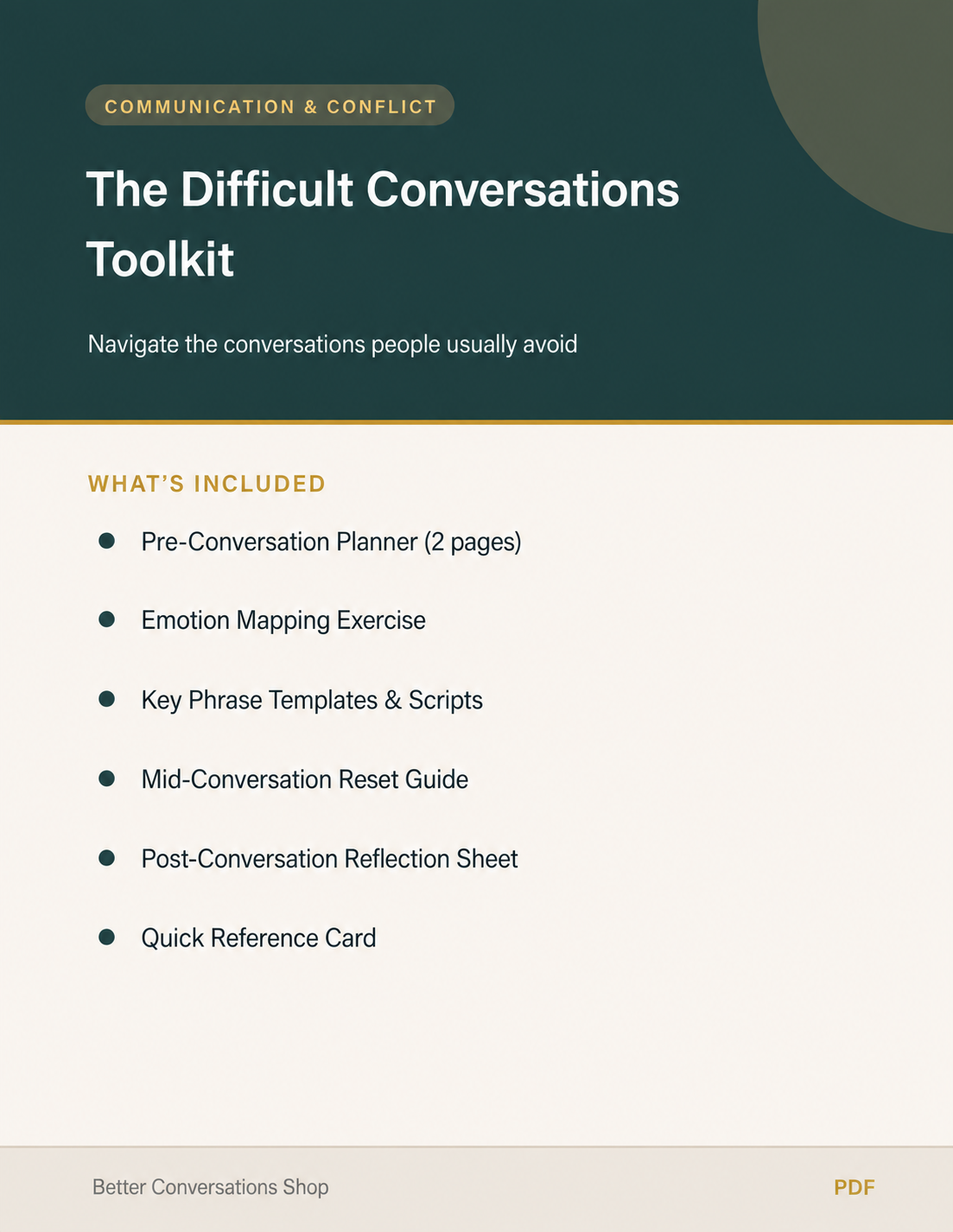
The Method Lab’s Difficult Conversations Toolkit includes a pre-conversation planner that walks you through defining objectives and selecting ground rules tailored to your specific situation.
The Five-Step Root Cause Analysis Framework
When conflict surfaces, people usually jump to solutions. What they don’t realize is that the visible problem is almost never the real problem. Root cause analysis means asking “why” enough times to get past the surface story.
Step 1: Name the observable problem. Not the interpretation, the fact. “The project shipped without the QA review we agreed on” instead of “You didn’t care about quality.”
Step 2: Ask why that happened. Listen for the actual answer. “I didn’t realize the deadline had moved” is a systems failure. “I forgot” is a personal failure. They require different solutions.
Step 3: Dig deeper. Ask why again. Maybe the communication channel was unclear, there were competing priorities, or the person wasn’t included in planning.
Step 4: Identify the pattern. Is this the first time or the third time? A one-off requires a different solution than a recurring pattern.
Step 5: Agree on what needs to change. Not blame. Change. “Going forward, we’ll confirm deadline changes in writing” or “We’ll build in a QA gate that can’t be skipped.”
This framework keeps the conversation focused on understanding, not defending. Teams find that the real issue is usually a process failure or miscommunication, not a character flaw.
Scripts for Difficult Team Conversations That Build Trust
Knowing the framework is one thing. Knowing what to actually say is another. Most people freeze because they don’t have language ready.
Opening the conversation: “I want to talk about [specific situation] because it’s affecting our working relationship and I want to fix it. I’m not here to blame you. I’m here to understand what happened and figure out how we move forward. Does now work?”
When someone gets defensive: “I hear that you’re frustrated. That makes sense. Help me understand what you’re reacting to. I want to make sure I’m not missing something.”
When you need to name an impact: “I’m not saying you meant this, but here’s what happened for me: [specific impact]. I need to know how we prevent this going forward.”
When someone blames you: “You might be right about that. Here’s my perspective on it. I’m interested in what we can both do differently, not in winning this argument.”
Closing with clarity: “So here’s what I’m hearing we’re committing to: [specific actions]. Does that match what you understood?”
The Difficult Conversations Toolkit includes conversation guides with layered scripts for different scenarios.
How to Facilitate Conflict in Team Meetings Without Shutting Down Dialogue
Most managers fear conflict and try to smooth it over. What they don’t realize is that conflict avoidance kills teams. When you shut down conflict, you teach people it’s not safe to be honest. Trust erodes silently. Resentment builds.
Facilitating conflict means creating conditions where people can disagree without the conversation becoming personal.

First, normalize it. Say: “We’re going to have different perspectives on this. That’s healthy. What matters is that we stay respectful and focused on solving the problem, not on winning.”
Second, invite it. Don’t wait for conflict to erupt. Ask directly: “Who has a different take on this?” or “What are we not considering?”
Third, listen for the underlying concern. When someone disagrees, they usually have a legitimate worry. “Help me understand what you’re concerned about here” often reveals something important.
Fourth, separate the disagreement from the person. “I disagree with that approach” is different from “You’re wrong.”
Fifth, look for the valid point in the dissent. Almost every disagreement contains a kernel of truth. Acknowledging it, “You’re right that this could create a workload issue,” shows you heard them.
Psychological safety isn’t about avoiding hard conversations. It’s about creating conditions where people can raise concerns without fear of retaliation. When that exists, teams solve problems faster because they’re not hiding information.
Templates for Managing Team Friction and Moving to Resolution
After the difficult conversation, clarity matters. A post-meeting alignment template keeps everyone on the same page:
|
Element |
Details |
|---|---|
|
What we agreed the problem was |
[Specific, observable issue] |
|
What we each committed to doing |
[Actions by person, with timeline] |
|
How we’ll measure success |
[Specific indicators] |
|
When we’ll check in |
[Date and format] |
|
What happens if we’re not on track |
[Escalation or adjustment plan] |
This template forces specificity. “We’ll communicate better” becomes “I’ll send a weekly update every Friday by 3pm.”
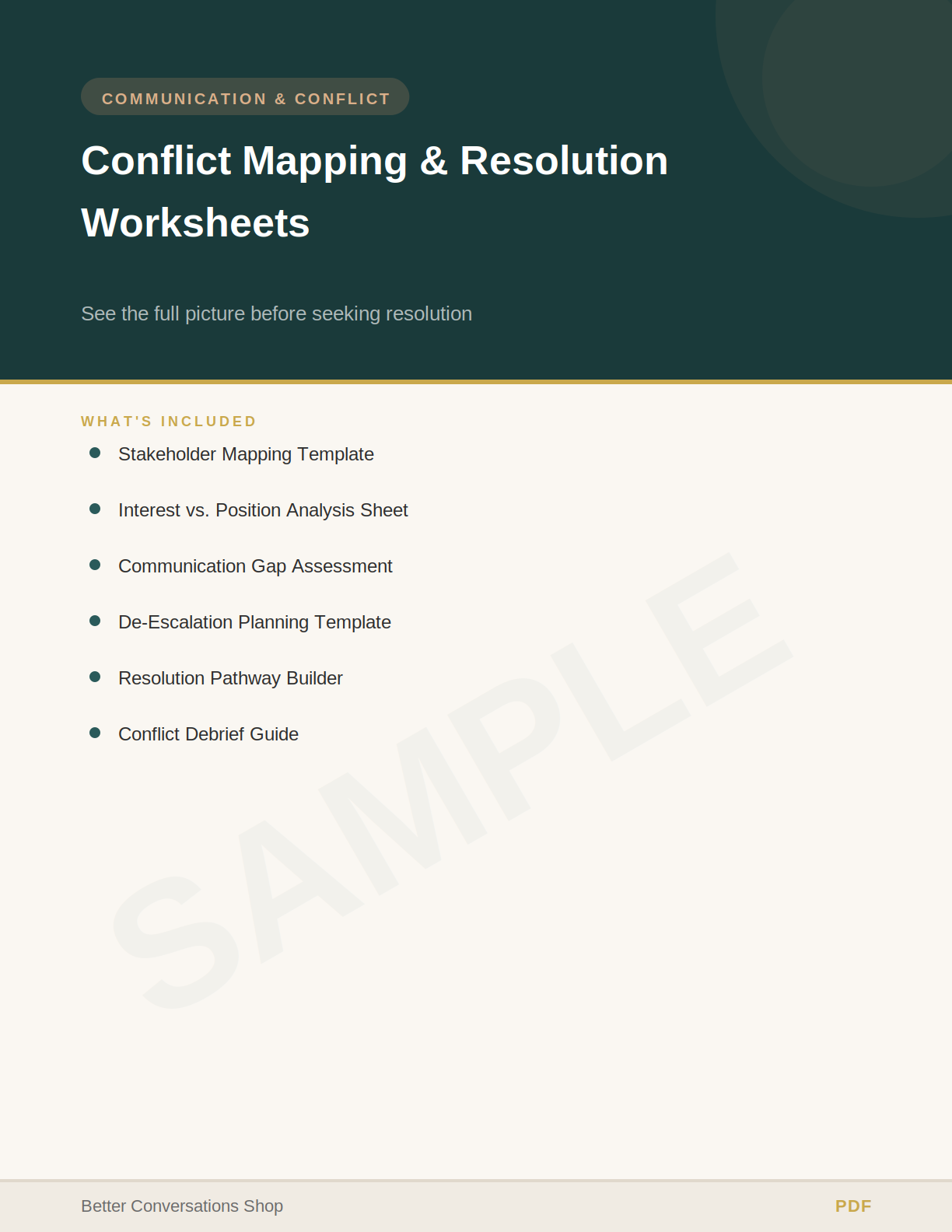
The Conflict Mapping & Resolution Worksheets from The Method Lab include templates for documenting the conflict and tracking resolution commitments over time.
Follow-up is where most teams fail. They have the conversation, feel relieved, then drift back into old patterns. Set a specific check-in date before people leave. Keep it short, 15 minutes. Ask: “How are we doing with what we committed to? What’s working? What’s not?” Address non-compliance immediately. Accountability is what proves the conversation mattered.
Remote and Hybrid Considerations for Structured Difficult Conversations
Difficult conversations are harder on video. You lose body language nuance. People hide in their cameras. But remote meetings also have advantages if structured right.
Advantages: Less performative, more intimate one-on-one feel. You can record conversations (with consent) and refer back to what was actually said.
Disadvantages: Video fatigue. A 60-minute difficult conversation on video is harder than in person. Less spontaneous dialogue. The pause before someone speaks is longer.
Structure remote difficult meetings effectively:
- Shorter, more frequent meetings. Instead of one 90-minute meeting, do three 30-minute sessions.
- Clear camera expectations. Ask people to have cameras on. You need to see faces.
- Use chat deliberately. If someone types something important, call it out.
- Breaks between difficult topics. People need time to reset.
- Follow up with written summary. Send a recap within 24 hours to prevent misunderstandings.
The Remote Facilitation Playbook from The Method Lab addresses the specific dynamics of virtual difficult conversations.
For hybrid meetings, remote participants feel like outsiders. Counter this by treating them as equals. Direct questions to them. Give them thinking time. Use shared documents where everyone can contribute simultaneously.
Post-Meeting Follow-Up and Accountability
The conversation ends. People agree to change. Then nothing happens. This is where most difficult team meetings fail.
Post-meeting accountability has three components:
First: Document what was agreed. Within 24 hours, send a written summary of commitments. Who’s doing what, by when. Make it specific enough that you can measure compliance.
Second: Create visibility. Put the commitments somewhere people see them. A shared document, a project management tool, a weekly team update.
Third: Check in regularly. Don’t wait for the next crisis. If someone committed to changing their communication approach, ask about it in your next one-on-one. This shows the commitment matters and catches backsliding early.
When someone isn’t following through, address it directly and quickly. “We agreed you’d do X. I haven’t seen that happening. What’s getting in the way?” Don’t let it slide. Accountability is what separates conversations that change things from conversations that feel good in the moment but change nothing.
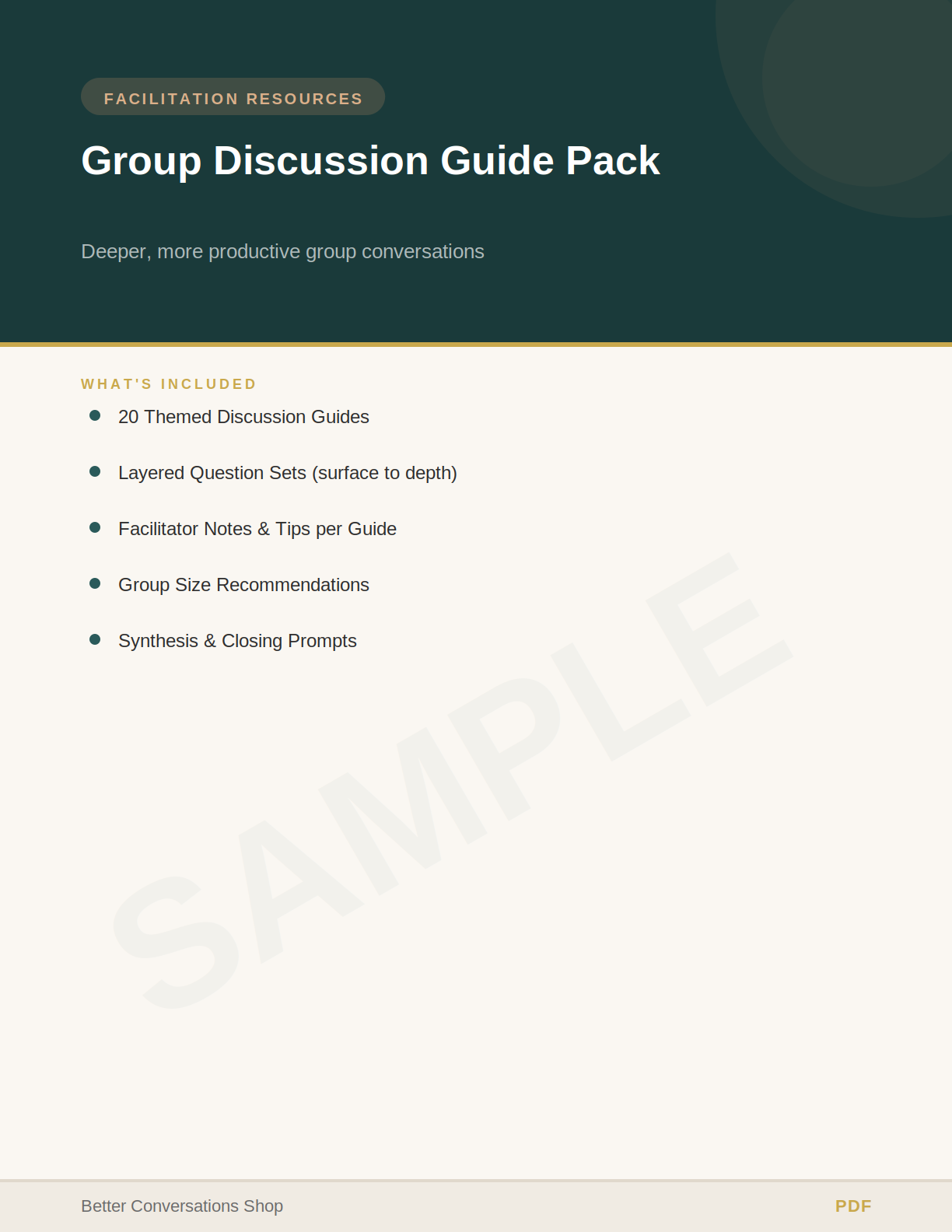
The Group Discussion Guide Pack from The Method Lab includes facilitation guides that help teams revisit difficult conversations and assess what’s shifted.
Difficult team meetings don’t have to leave people damaged. With structured frameworks, clear objectives, and intentional follow-up, they can strengthen teams. You move from conflict that erodes trust to conflict that builds it. People see that hard conversations are survivable. They learn that honesty doesn’t mean rejection.
The Method Lab has built tools specifically for this: conversation guides, conflict mapping worksheets, and facilitation playbooks that give you the structure to handle these conversations with confidence. Get your free toolkit and start turning difficult meetings into opportunities for real team alignment.
Frequently Asked Questions
How do structured frameworks reduce anxiety when leading difficult team meetings?
Structured frameworks provide a clear roadmap that removes uncertainty from the conversation. When you know which questions to ask, how to sequence them, and what responses to expect, you enter the meeting with confidence. This clarity transfers to your team—they sense your preparation and feel safer engaging. A framework also creates psychological safety by establishing ground rules upfront, signaling that the conversation has boundaries and purpose rather than feeling like a personal attack.
What makes a script for difficult team conversations feel authentic rather than robotic?
Effective scripts are anchors, not word-for-word recitations. They provide the opening line, key transition phrases, and clarifying questions—but leave room for your natural tone and responses. The best scripts also build in pauses for listening, which makes them feel conversational. Scripts that feel robotic typically try to control every word; scripts that work give you the structure while letting your genuine concern for the team show through.
Can these frameworks work for small teams, or are they designed for larger organizations?
Structured frameworks work for any team size. In fact, small teams often benefit more because the stakes feel higher when everyone knows everyone. A five-person team using ground rules and root cause analysis frameworks will experience less lingering tension than one that avoids structure. The frameworks scale down—you might spend 15 minutes on a difficult conversation in a small team versus 45 minutes in a larger group, but the structure remains the same.
How do you handle emotional layers in difficult conversations using these frameworks?
Frameworks that address emotional intelligence include space for acknowledging feelings before moving to problem-solving. This means naming the emotion you observe (frustration, defensiveness, fear) without judgment, then asking clarifying questions about what’s underneath. Root cause analysis frameworks specifically help separate the emotion from the issue—once the team sees the actual problem, emotions often settle. The key is validating emotion as real while keeping the conversation focused on what you can control.