Table of Contents
- Why New Manager Onboarding Matters
- Building Your First 90 Days Leadership Playbook
- Creating a New Manager Onboarding Checklist
- Onboarding Templates for New Leaders
- Establishing Role Clarity and Responsibilities
- Adapting Your Playbook for Remote and Hybrid Teams
- Measuring Onboarding Success
- Frequently Asked Questions
Last Updated: August 25, 2026
Why New Manager Onboarding Matters
The first 90 days of a manager’s tenure determine whether they’ll build credibility or spend months recovering from early missteps (peer-reviewed research). Without structured onboarding, new managers often skip stakeholder conversations, make premature decisions without context, or fail to establish role clarity with their teams, resulting in misaligned expectations, missed early wins, and eroded trust.
A structured new manager onboarding playbook transforms the first 90 days from reactive scramble into deliberate progression. Rather than hoping your new manager figures things out, you provide a roadmap covering listening, stakeholder mapping, direction-setting, early wins, and operating rhythm. Leaders who follow a structured 90-day framework establish credibility faster, make better early decisions, and create stronger team alignment (apa.org).
Building Your First 90 Days Leadership Playbook
A first 90 days leadership playbook breaks the critical early phase into three distinct phases: listening, direction-setting, and rhythm-building, each with specific objectives, stakeholder interactions, and early wins. For the new manager, it removes ambiguity about what matters most and when. For their boss, it creates accountability checkpoints. For HR and leadership development teams, it ensures consistency across how managers are onboarded.

Days 1-30: Listening and Stakeholder Mapping
The first month is about understanding the landscape, not making decisions. Most new managers want to demonstrate impact immediately, but the most effective leaders spend this phase listening and mapping stakeholders.
Schedule one-on-one conversations with direct reports, peers, key stakeholders, and your boss. These are discovery conversations, ask about priorities, pain points, what’s working, and what the previous manager could have done differently. Stakeholder mapping documents who influences decisions, who needs consultation, and who will be critical allies.
The checklist for days 1-30 should include:
- One-on-one conversations with all direct reports (30-45 minutes each)
- Stakeholder meetings with cross-functional partners
- Documentation of team structure, reporting relationships, and current projects
- Review of recent performance data and team metrics
- Understanding of compliance requirements and organizational policies
By day 30, the new manager should have a clear picture of team dynamics, key challenges, and organizational priorities without having made major decisions.
Days 31-60: Direction-Setting and Early Wins
Once the new manager understands the landscape, they’re ready to set direction and create early wins. Direction-setting means clarifying expectations, priorities, and how success will be measured. Work with the manager to identify 2-3 key priorities for their first year, meaningful enough to move the needle but achievable within their sphere of influence.
Early wins are smaller, tactical successes that build momentum and demonstrate the new manager’s judgment. These might be fixing a broken process, removing a blocker the team has complained about, or improving communication cadence.
The days 31-60 checklist should cover:
- Presentation of findings from the listening phase
- Alignment with your boss on priorities and early win opportunities
- Communication of team direction and expectations
- Identification of quick wins and process improvements
- Establishment of regular feedback loops and 1:1 meeting cadence
Days 61-90: Building Your Operating Rhythm
The final 30 days focus on establishing sustainable practices and rhythms. Operating rhythm includes regular one-on-one meetings, team meetings, feedback cycles, and decision-making processes. The manager should have clarity on how decisions get made, who gets consulted, and how information flows.
Include a formal 90-day checkpoint to review accomplishments, progress, and needed adjustments. This signals that onboarding is intentional and measured.
The days 61-90 checklist should include:
- Establishment of recurring meeting rhythms
- Documentation of decision-making processes and role clarity
- 90-day review and reflection meeting with direct boss
- Feedback collection from team and key stakeholders
- Identification of ongoing development areas and next-phase priorities
Creating a New Manager Onboarding Checklist
A new manager onboarding checklist translates the 90-day playbook into actionable tasks. It should be specific enough to guide action but flexible enough to adapt to different roles and organizational contexts.
Pre-Start Preparation
Before the new manager’s first day, preparation removes friction and creates psychological safety. Pre-start tasks should include:
- Workspace setup (desk, equipment, access credentials)
- IT and security onboarding (email, systems, passwords)
- Organizational background materials (strategy, recent changes, org chart)
- Team roster with photos and brief bios
- Calendar holds for first-week meetings
- Introduction message from the hiring manager
The hiring manager should also prepare the team with a brief message explaining who the new manager is and what to expect. This reduces anxiety and creates openness.
First Week Essentials
The first week establishes patterns. The new manager should:
- Meet with direct boss (clarify expectations, priorities, communication cadence)
- Meet with HR (compliance, benefits, policies, organizational culture)
- Tour facilities and meet key people
- Conduct initial one-on-ones with direct reports (listening, not directing)
- Review team’s current projects and priorities
- Document immediate questions or blockers
Month-by-Month Checkpoints
Month 1: Completion of stakeholder listening conversations, documentation of team dynamics, identification of questions for boss.
Month 2: Alignment on top priorities, communication of direction to team, execution of early wins, feedback collection.
Month 3: Establishment of sustainable meeting rhythms, 90-day review and reflection, feedback on new manager’s performance, planning for next phase.
Onboarding Templates for New Leaders
Templates accelerate onboarding and ensure consistency. Effective templates should include:
Stakeholder Interview Template: Structured questions for the listening phase ensuring consistent exploration of priorities, pain points, and expectations.
One-on-One Meeting Framework: A guide for conducting effective first one-on-ones with direct reports, covering listening questions and expectation-setting.
90-Day Priorities Document: A template for documenting the new manager’s top 2-3 priorities for the first year, aligned with organizational strategy.
Early Wins Tracker: A simple template for identifying, tracking, and celebrating quick wins to maintain momentum.
Operating Rhythm Calendar: A template showing recurring meetings, feedback cycles, and decision-making rhythms.
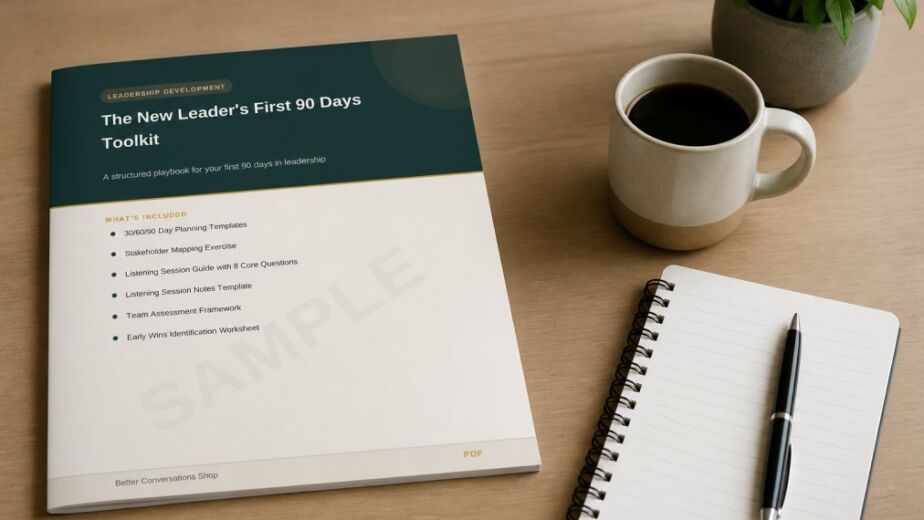
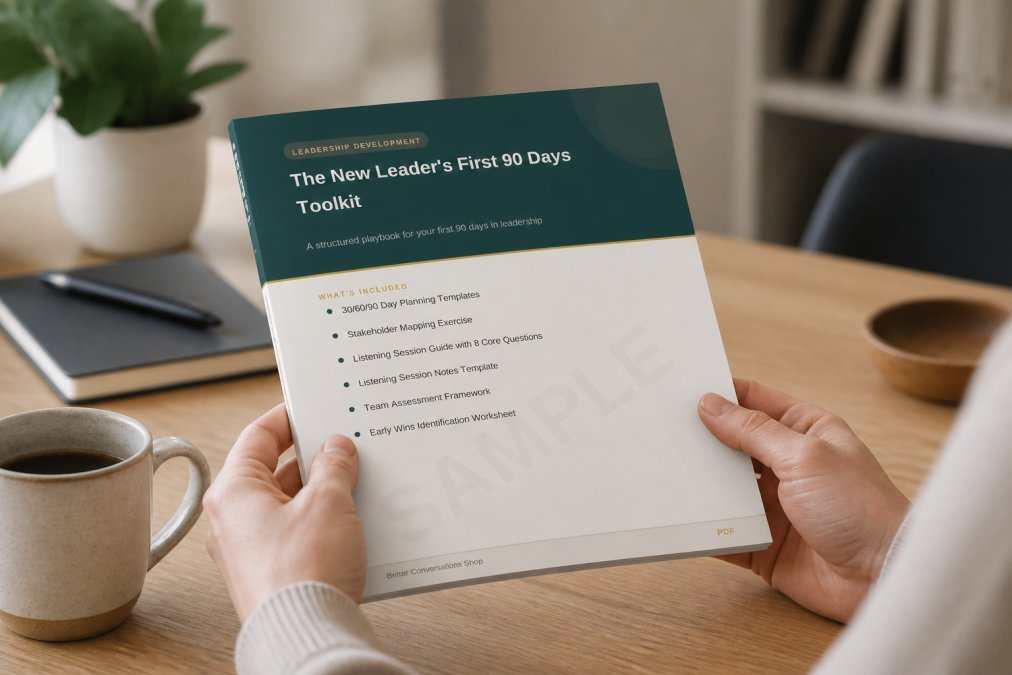
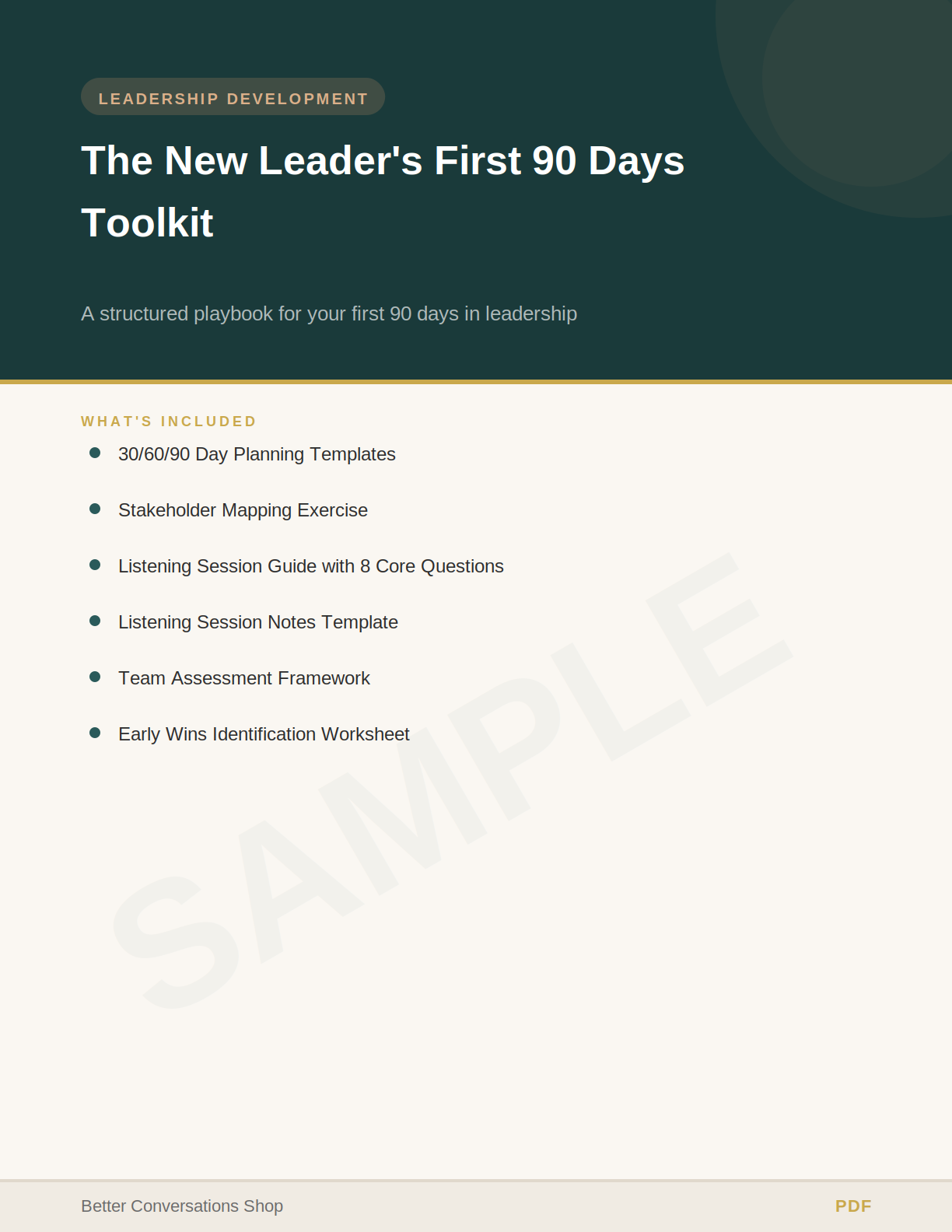
The Method Lab provides ready-to-use templates through The New Leader’s First 90 Days Toolkit, which includes stakeholder mapping guides, conversation frameworks, and accountability tracking tools. Templates provide structure without removing the human element of leadership.
Establishing Role Clarity and Responsibilities
Role clarity is foundational to effective onboarding. When a new manager doesn’t understand their scope of authority, decision-making boundaries, or key responsibilities, they either overstep or hesitate when they should act.

A role clarity conversation should cover:
- Key responsibilities and how success is measured
- Decision-making authority (what the manager can decide alone, what requires consultation, what requires approval)
- Reporting relationships and escalation paths
- Key stakeholders and how to work with them
- Resource constraints and budget authority
- Performance metrics and evaluation criteria
This conversation should happen with the new manager’s boss in week one, then be revisited during the 90-day checkpoint. Explicit conversation prevents misalignment and gives the new manager confidence to make decisions.
Adapting Your Playbook for Remote and Hybrid Teams
The 90-day playbook framework works across work environments, but remote and hybrid contexts require specific adaptations. For remote managers, the listening phase becomes more intentional. Without hallway conversations, one-on-ones become the primary mechanism for understanding team dynamics. Create a shared document capturing who influences what and how decisions flow through the organization.
For hybrid teams, the playbook should address how the manager will create inclusion across distributed and in-office team members. Early wins might include establishing clear communication protocols or ensuring remote team members have equal visibility.
Remote and hybrid managers often struggle with establishing presence and credibility. The playbook should include explicit strategies: regular team communication, visible decision-making, and intentional relationship-building. The operating rhythm should emphasize asynchronous communication where possible and create clear boundaries around synchronous time.
Measuring Onboarding Success
Measure success across multiple dimensions:
Time-to-Productivity: How long before the new manager is making independent decisions? Managers following a structured playbook typically reach full productivity faster.
Early Wins Delivered: Are managers executing on identified early wins in the first 60 days?
Team Engagement: What does the team think of their new manager after 90 days? Pulse surveys reveal whether the manager has established credibility.
Retention: Do new managers stay in their roles? High turnover often signals inadequate onboarding.
Boss Alignment: Does the new manager’s boss feel confident in their judgment by day 90?
Performance Metrics: Are teams with newly onboarded managers hitting their targets?
According to research from the Center for Creative Leadership, managers who receive structured onboarding and feedback in their first 90 days are significantly more likely to succeed long-term.
New manager onboarding is too important to leave to chance. A structured playbook removes ambiguity, accelerates credibility-building, and creates consistency across how your organization develops leaders. The Method Lab provides ready-to-use tools designed specifically for this work. The New Leader’s First 90 Days Toolkit includes stakeholder mapping guides, one-on-one conversation frameworks, and accountability tracking tools that translate the 90-day playbook into action.
Frequently Asked Questions
What is the 30-60-90 rule for a new manager?
The 30-60-90 framework divides your first three months into distinct phases. Days 1-30 focus on deep listening, understanding team dynamics, and mapping stakeholders. Days 31-60 concentrate on setting direction, establishing priorities, and securing early wins that build credibility. Days 61-90 shift toward building sustainable systems, refining your leadership operating rhythm, and preparing for ongoing performance management. This phased approach ensures you establish credibility while avoiding premature decisions based on incomplete information.
What should be included in a new manager onboarding playbook?
A comprehensive playbook covers role clarity and key responsibilities, stakeholder mapping with names and priorities, standardized training workflows for your team’s tools and processes, compliance and documentation requirements, structured one-on-one meeting templates, performance metrics and how they’re tracked, cultural assimilation strategies specific to your organization, and feedback loops for continuous improvement. The playbook should also include templates for common conversations like goal-setting, performance reviews, and conflict resolution. The Method Lab’s New Leader’s First 90 Days Toolkit provides exactly this structure, walking you through each phase with actionable frameworks.
How do you measure the success of a new manager onboarding program?
Success metrics include time-to-productivity (how quickly the new manager makes independent decisions), employee retention rates for their direct reports, 360-degree feedback scores at the 90-day mark, achievement of early wins and milestones, manager confidence and self-assessment scores, and team engagement survey results. Track both leading indicators (completion of onboarding milestones, one-on-one meeting frequency) and lagging indicators (performance outcomes, retention). Regular check-ins at 30, 60, and 90 days help you adjust support and identify gaps early.
What are the common pitfalls in new manager onboarding?
Frequent mistakes include moving too fast into decision-making without sufficient listening, failing to establish clear role clarity and responsibilities, skipping stakeholder mapping and leaving key relationships unaddressed, treating onboarding as a one-time event rather than a phased process, assuming the new manager knows your organizational culture without explicit teaching, not providing templates or standardized workflows that reduce decision fatigue, and neglecting psychological safety—new managers need to feel safe asking questions. Avoiding these pitfalls requires a structured playbook and consistent manager-led support throughout the first 90 days.