Table of Contents
- What Executive Presence Training Actually Means for New Managers
- The Three Pillars of Executive Presence: Gravitas, Communication, and Appearance
- Executive Presence Coaching Techniques That Work in Week One
- Your First 90 Days Leadership Playbook: Building Presence From Day One
- Leadership Communication Skills for New Managers: High-Stakes Conversations
- Executive Presence in Remote and Hybrid Environments
- Micro-Habits That Build Executive Presence Over Time
- Measuring the ROI of Your Executive Presence Development
- Frequently Asked Questions
Last Updated: August 26, 2026
What Executive Presence Training Actually Means for New Managers
Executive presence training for new managers isn’t about adopting a persona or pretending to be someone you’re not. It’s about developing the credibility, clarity, and composure that allow your team to trust your decisions and stakeholders to take you seriously.
Many new managers conflate executive presence with confidence alone. Confidence is necessary but insufficient. You need gravitas, the weight of thoughtful decision-making. You need communication clarity, the ability to make complex ideas land. You need intentional appearance and branding, visual signals that reinforce your competence. When these three elements align, people listen more carefully, follow through on commitments, and advocate for your team’s priorities in rooms you’re not in.
At The Method Lab, managers who establish presence in their first 90 days tend to outperform those who don’t (peer-reviewed research). This guide walks you through what that actually looks like, with frameworks you can implement immediately.
The Three Pillars of Executive Presence: Gravitas, Communication, and Appearance
Executive presence rests on three interconnected pillars.
Gravitas is the weight people feel when you speak or decide. It comes from strategic thinking, self-awareness, and composure under pressure. A manager with gravitas doesn’t have all the answers; they ask the right questions and make decisions people trust.
Communication is clarity and structure. Can you explain a complex situation in a way that makes sense to your audience? Communication is where most new managers stumble because they assume clarity comes naturally. It doesn’t.
Appearance and professional branding extends beyond clothing to how you show up in every setting, your email signature, how you structure your calendar, how you prepare for meetings. These signals accumulate into a coherent impression that reinforces your credibility.
Building Gravitas and Credibility
Gravitas is built through consistent patterns of behavior and decision-making. Start with strategic thinking: before you decide, consider short-term and long-term impacts, who benefits and who bears the cost, and what assumptions you’re making. When your team sees you reasoning through problems this way, they develop trust in your judgment.
Second, develop self-awareness. Know what you’re good at and what you’re not. A manager who can say, “I’m going to think about this overnight because I tend to make hasty decisions when I’m frustrated” demonstrates more gravitas than one who pretends to have perfect equanimity.
Third, practice composure in high-stakes moments. When a project fails or you receive critical feedback, pause, acknowledge the situation clearly, and focus on what comes next. This steadiness builds confidence in your leadership.
Mastering Non-Verbal Communication and Body Language
Your body language communicates before you speak. Sit forward slightly in meetings, not back in your chair. Stand with your weight distributed evenly. This signals active engagement.
Master eye contact. In most professional settings, direct eye contact signals confidence and honesty (apa.org). When speaking to your team, move your gaze around the room. When someone is speaking to you, look at them.
Control your hands and face. Nervous habits read as anxiety. Your facial expressions should match your message, don’t smile when delivering difficult feedback. Be intentional about proximity and positioning. Where you sit in meetings matters. Sitting at the head of the table reinforces authority. Sitting at an angle in one-on-ones feels more collaborative.
Professional Appearance and Executive Branding
Your appearance signals how seriously you take your role. Understand your organizational culture first. Your goal is to dress slightly more formally than the baseline. If your organization is casual, add one formal element: a structured blazer or quality shoes. If it’s business casual, wear suits occasionally.
Quality matters more than quantity. One well-fitting blazer in a neutral color serves you better than three cheap ones. Your email signature should be clean and consistent. Your calendar should reflect your priorities. Your LinkedIn profile should align with how you show up in person.
Executive Presence Coaching Techniques That Work in Week One
Technique 1: The Strategic Listening Protocol
Most new managers talk too much in their first weeks. The opposite approach works better.
Implement the strategic listening protocol: in your first two weeks, spend 80% of meeting time listening and 20% talking. Before each meeting, identify what you need to understand: What does this person care about? What are they worried about? Then ask questions designed to surface those answers. This accomplishes three things simultaneously. First, you gather critical information about your team and organization. Second, you signal that you’re thoughtful and interested in understanding before deciding. Third, you build relationships quickly because people feel heard.
Technique 2: Stakeholder Mapping for Influence
You inherit a web of relationships and power dynamics. Create a simple matrix listing key people who influence your success on one axis, and rating them on two dimensions: How much influence do they have on your success? How well do you understand their priorities?
The people in the high-influence, low-understanding quadrant are your focus. Schedule one-on-one conversations with each. Ask about their priorities, their challenges, what they need from your team. This is the foundation of effective leadership.
Technique 3: The Decision-Making Framework
Before you make any significant decision, ask: Who needs to know about this? Who might be affected? Who has relevant expertise I should consult? What’s the deadline? What’s reversible and what’s not?
Then decide on your approach. For reversible decisions with limited impact, decide quickly and communicate after. For irreversible decisions with broad impact, consult first and decide after. This framework prevents you from making decisions that blindside people and signals that you think strategically about implications.
Your First 90 Days Leadership Playbook: Building Presence From Day One
Days 1-30: Listen, Learn, and Establish Credibility
Your job in the first month isn’t to change anything. It’s to understand what you’ve inherited and signal that you’re thoughtful about decisions.
Meet one-on-one with every person on your team. Ask about their role, their strengths, what they enjoy, what frustrates them. Ask about the team’s history, wins, and failures. Ask about your predecessor, what worked, what didn’t. Take notes. Don’t commit to changes.
Listen to your boss. Understand their expectations, priorities, and concerns about your team. Ask what success looks like in your first 90 days and what your biggest challenge will be.
Spend time understanding your organization’s culture, politics, and unwritten rules. Who has real influence? Where do decisions actually get made? By the end of the month, you should be ready to make informed decisions. Your credibility comes from demonstrating that you listen carefully, ask good questions, and don’t rush to judgment.

Days 31-60: Demonstrate Strategic Thinking and Early Wins
By day 31, you have enough information to make informed decisions. Start with one or two quick wins, changes your team has been asking for that don’t require extensive approval and visibly improve how work gets done.
Begin communicating your strategic perspective. Share your thinking about the team’s priorities, challenges, and opportunities. Frame this as preliminary thinking, not final conclusions. Invite feedback. Show that you’ve thought through implications.
Make staffing or structural decisions if necessary. If someone isn’t working out, address it directly. If there’s a role that needs filling, move on it. These decisions signal that you’re serious about performance.
By day 60, your team should understand your leadership approach, see evidence that you listen and act, and believe you’re thinking strategically about their future.
Days 61-90: Build Your Leadership Operating Rhythm
Establish patterns and rhythms that will define how you lead. Implement your regular meeting cadence, whether weekly one-on-ones, monthly all-hands, or quarterly strategy sessions. These meetings are where your leadership presence compounds.
Establish clear decision-making processes. How will decisions get made? Who gets input? How will you communicate decisions? When you’re consistent about this, people develop trust in your judgment.
Set clear expectations for performance. By day 90, your team should understand what success looks like, what you expect from them, and how you’ll measure progress.
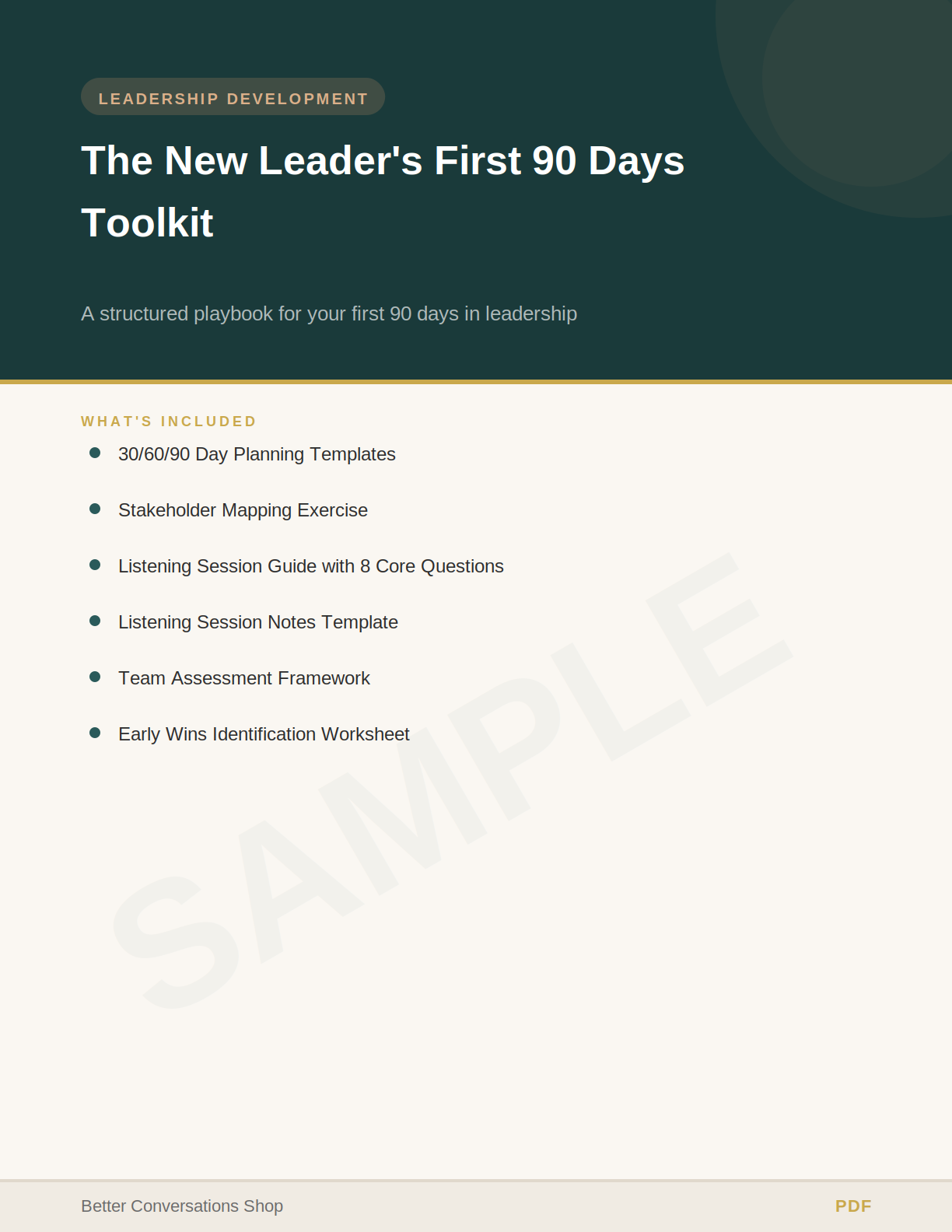
The Method Lab’s New Leader’s First 90 Days Toolkit provides structured frameworks for each phase, with templates and decision-making guides.
Leadership Communication Skills for New Managers: High-Stakes Conversations
Clarity Over Polish: Structuring Your Message
Most new managers prioritize sounding smart. They should prioritize being understood.
Before you communicate anything important, structure your message. Start with the headline: What’s the main point? State it first. Then provide context: Why are we doing this? Then explain your decision. Finally, clarify next steps: What happens now? This structure works because it respects the listener’s time and attention.
Active Listening and Emotional Intelligence in One-on-One Meetings
One-on-one meetings are your highest-use leadership tool. Implement active listening: don’t plan your response while someone is talking. Genuinely try to understand their perspective. Ask follow-up questions. Reflect back what you hear.
Emotional intelligence means you’re paying attention to what’s not being said. If someone seems disengaged, ask about it. If they’re stressed, acknowledge it. If they’re celebrating a win, recognize it genuinely. These moments of human connection build loyalty and trust.

Handling Difficult Conversations With Composure
Difficult conversations are where executive presence is tested. Approach them with structure. Start by stating the situation factually. Then ask for their perspective and listen without interrupting. If action is needed, be clear about what needs to change, how you’ll support them, and the timeline.
Composure means you’re calm, direct, and focused on solving the problem. Your tone should match the seriousness of the situation without being punitive. Prepare before difficult conversations, don’t have them when you’re emotional.
Executive Presence in Remote and Hybrid Environments
In video calls, make eye contact with the camera, not the screen. Sit forward. Use hand gestures naturally. Minimize distractions in your background.
Asynchronous communication requires clarity above all else. State your main point first. Provide necessary context. Be explicit about what you need and by when.
In hybrid environments, be intentional about presence. If some people are in the room and others are remote, position yourself so you’re equally visible to both. Don’t have side conversations with in-room attendees. Remote work also changes how you build relationships. Compensate by being more intentional about connection. Schedule regular one-on-ones. Create space in meetings for personal check-ins. Recognize wins publicly.
Micro-Habits That Build Executive Presence Over Time
Start with how you prepare for meetings. Spend 10 minutes before each meeting reviewing the agenda and anticipating questions. This allows you to show up more present and thoughtful.
Implement a weekly reflection practice. Every Friday, spend 15 minutes reviewing the week: What decisions did I make? How did they land? What would I do differently? This self-awareness practice prevents repeated mistakes.
Practice deliberate communication. In meetings, pause before you speak. Make sure what you’re about to say is clear and necessary. Notice how often you’re talking versus listening.
Develop a consistent personal brand. Wear similar styles consistently. Use the same communication approach. Show up on time reliably. These consistency signals create an impression of reliability and professionalism.
Seek feedback actively. Ask your boss, peers, and team: How am I showing up? What’s working? What could be better? Don’t defend or explain. Just listen.
These micro-habits seem small individually. Collectively, they create the foundation of executive presence. The managers who develop strong presence aren’t necessarily the most naturally charismatic, they’re the ones who are intentional about how they show up and willing to practice consistently.
Measuring the ROI of Your Executive Presence Development
Start with team engagement and retention. When you establish presence, your team’s engagement typically improves (gallup.com). Measure this through surveys, retention rates, and the quality of people who want to join your team.
Second, measure decision velocity. When people trust your judgment, decisions move faster. Track how long decisions take and how smoothly they’re executed.
Third, measure stakeholder relationships. Track how often you’re getting pulled into important conversations, how often your team is asked to lead initiatives, and how much support you get for your priorities.
Fourth, measure your own confidence and composure. Are you more comfortable in difficult conversations? Do you feel more prepared for high-stakes meetings?
Finally, measure business impact. Strong executive presence eventually translates to business results. Your team delivers better outcomes. You attract better talent. You gain influence.
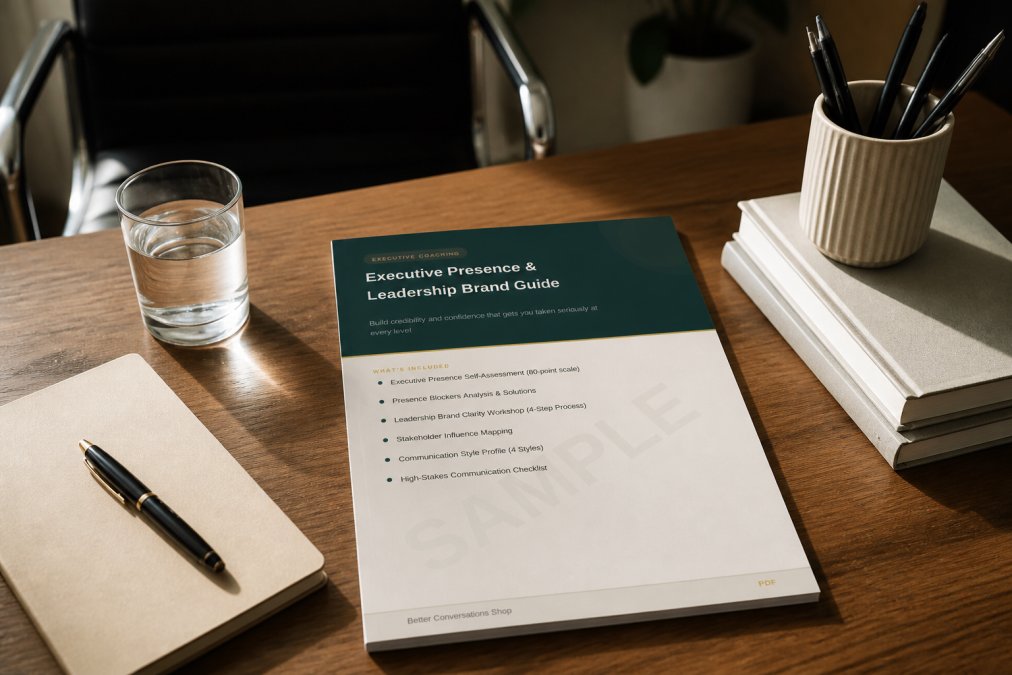
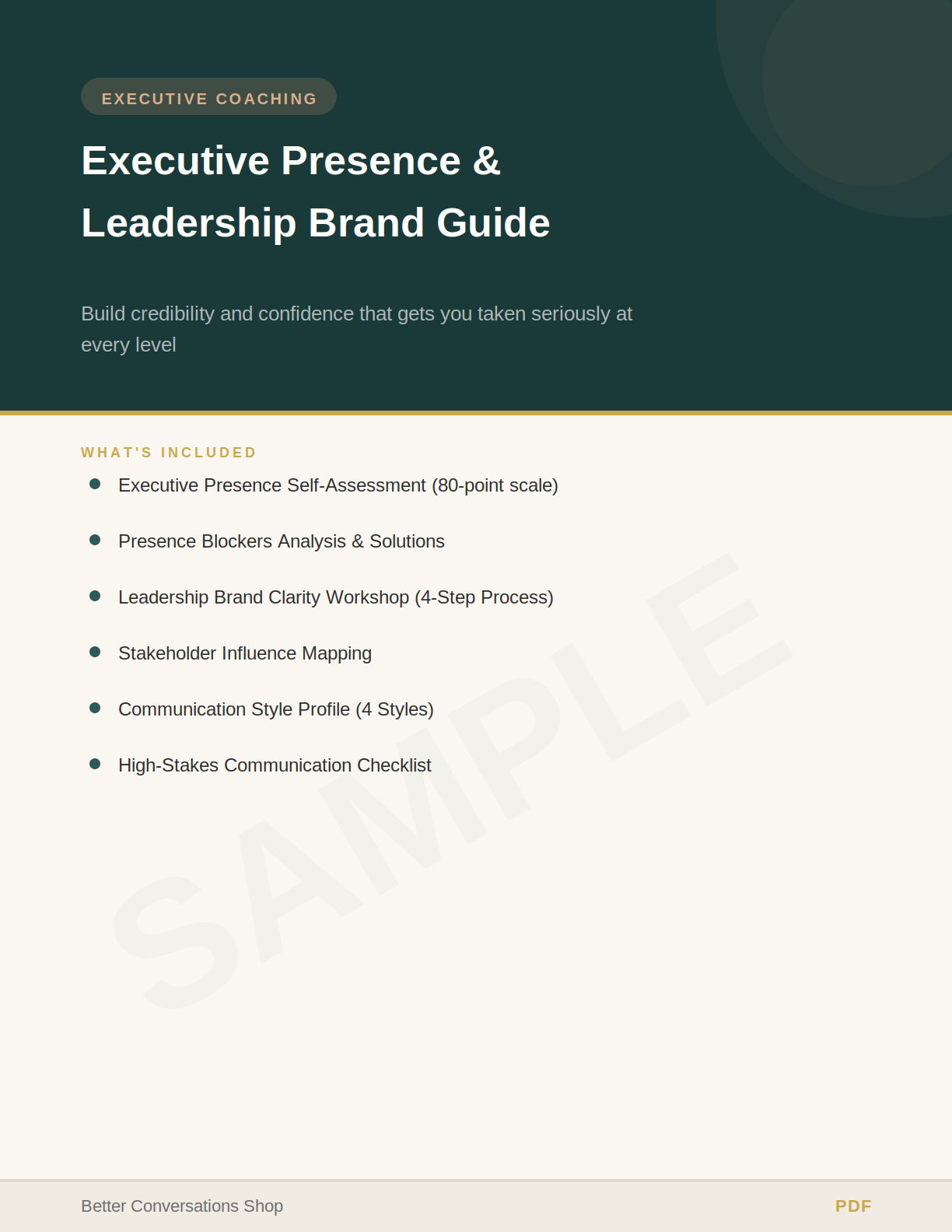
The Method Lab’s Executive Presence & Leadership Brand Guide includes a self-assessment that helps you measure where you stand and track progress over time.
Executive presence training for new managers isn’t a luxury, it’s foundational to your success. The managers who establish presence early tend to advance faster, build stronger teams, and have greater influence. The framework is learnable. The techniques are practical. The investment in developing your executive presence in your first 90 days pays dividends throughout your career. Get started with The Method Lab’s structured resources and build the credibility and confidence that define effective leadership.
Frequently Asked Questions
What are the key components of executive presence training for new managers?
Executive presence training focuses on three core components: gravitas (your ability to command respect and make sound decisions), communication (clarity, structure, and strategic framing), and professional appearance (how you present yourself visually and verbally). For new managers, training emphasizes self-awareness, active listening, emotional intelligence, and the ability to influence stakeholders. The goal is to establish credibility quickly and demonstrate leadership capability in high-stakes situations.
How can I develop executive presence in my first 90 days as a new manager?
Focus on three phases: Days 1-30, prioritize deep listening and stakeholder mapping to understand organizational dynamics. Days 31-60, demonstrate strategic thinking by identifying early wins and communicating decisions with clarity. Days 61-90, establish your leadership operating rhythm through consistent one-on-one meetings, transparent feedback, and visible decision-making. These structured phases build credibility progressively and signal to your team and peers that you’re a capable, thoughtful leader.
What executive presence coaching techniques work best for new managers?
Three proven techniques deliver immediate results: Strategic Listening Protocol (asking clarifying questions and reflecting back what you hear to build trust), Stakeholder Mapping for Influence (identifying key decision-makers and understanding their priorities), and a Decision-Making Framework (using a consistent structure to evaluate options and communicate choices). These techniques build professional credibility, demonstrate composure, and help you navigate organizational culture with confidence.
How do I maintain executive presence in a remote or hybrid work environment?
Remote presence requires intentional body language and communication clarity. Position yourself at eye level on video calls, minimize distractions in your background, and speak with deliberate pacing and clear structure. In hybrid settings, be visible and engaged in synchronous meetings, follow up written communication with brief verbal summaries, and schedule regular one-on-one conversations to maintain interpersonal connection. Consistency across channels reinforces your leadership credibility.
Why is executive presence critical for first-time managers?
Your team’s confidence in your leadership directly affects their engagement, retention, and performance. First-time managers who establish strong executive presence in the first 90 days tend to outperform those who don’t. Presence signals that you understand organizational strategy, can make tough decisions, and will advocate for your team. Without it, you risk losing credibility with peers, struggling to influence upward, and failing to retain top talent.
How do I measure whether my executive presence training is working?
Track concrete metrics: stakeholder feedback (peer and manager perception of your credibility), team engagement scores (do your direct reports trust your decision-making?), speed of influence (how quickly do your recommendations gain traction?), and career progression (are you being considered for higher-level roles?). Also monitor internal signals like how often colleagues seek your input on strategic decisions and whether your team members defend your decisions to others.