
Table of Contents
- What Coaching Playbooks Actually Do for Your Team
- Core Components Every Coaching Playbook Needs
- How to Build a Coaching Playbook That Works for Your Situation
- Teaching Your Team the Playbook: Adoption Strategies That Stick
- Real Coaching Playbook Examples Across Industries
- Best Coaching Playbook Software and Tools
- Football Playbook Templates for Coaches: Principles That Translate
- Common Mistakes That Derail Playbook Implementation
Last Updated: August 9, 2026
What Coaching Playbooks Actually Do for Your Team
A coaching playbook is a structured document that outlines your coaching philosophy, key plays, scenarios, and communication frameworks in one accessible place. It’s the difference between coaching from instinct and coaching with consistency.
Most coaches operate without one, relying on experience and improvisation. That works until you need to scale, train others, or prove impact. The moment you try to replicate success across multiple clients or team members, the cracks show.
Here’s what changes when you build one: your team stops reinventing the wheel. New coaches don’t spend weeks figuring out your approach. Everyone works from the same playbook. Execution becomes faster, more consistent, and measurable.
A coaching playbook serves three core functions. First, it documents your best practices so they don’t disappear when people leave or your team grows. Second, it provides a training tool that cuts onboarding time significantly. Third, it gives you concrete proof that your coaching follows a structured methodology, not random advice.
Core Components Every Coaching Playbook Needs
Your playbook should contain five essential elements.
Your coaching philosophy and values. This is the foundation. What do you believe about how change happens? What’s non-negotiable in your approach? Keep this to 200-300 words, clear enough that someone could explain it to a client in five minutes.
Key plays and scenarios. These are your signature moves: conversation frameworks, diagnostic questions, intervention sequences that work. Document them with enough detail that someone else could execute them, but not so much that they become rigid scripts. Include the thinking behind each play, why you use it, when it works, and what to watch for.
Visual aids and reference materials. Worksheets, decision trees, assessment tools, conversation guides. Anything that helps someone apply the playbook. These should be clean, professional, and immediately usable.
Implementation guidance. How do you onboard someone into this playbook? What’s the learning sequence? How do they practice? How do they know they’re doing it right?
Feedback and iteration cycles. How will you know the playbook is working? What metrics matter? How often do you review and update it? A playbook that never changes becomes irrelevant.
The Method Lab’s approach emphasizes clarity over comprehensiveness. You don’t need a 200-page manual. You need something people actually reference and use. That usually means 30-50 pages of core content, organized so anyone can find what they need in under a minute.
How to Build a Coaching Playbook That Works for Your Situation
Building a playbook is a four-step process.
Step 1: Define Your Coaching Philosophy and Goals
Start by articulating what you actually believe about coaching based on your experience.
Ask yourself: What outcomes matter most to your clients? What’s your theory of change? What separates a coaching engagement that lands from one that doesn’t? Write this down in plain language. Avoid jargon.
Next, identify your core goals for the playbook itself. Are you building it to train new coaches, standardize how your team works, demonstrate value to clients, or scale your impact? Your answer shapes what goes into the playbook and how detailed it needs to be.
Step 2: Map Out Your Plays and Scenarios
Document the frameworks, conversation sequences, and diagnostic tools you use most. For each play, include: the name, when you use it, step-by-step execution, what success looks like, and common mistakes.
Many coaches find it helpful to record themselves or write detailed notes after sessions. Patterns emerge. You’ll notice you ask certain questions repeatedly, follow similar sequences, use particular metaphors. Those are your plays. Capture them while they’re fresh.
Step 3: Create Visual Aids and Documentation
Your plays need supporting materials: decision trees, worksheets, assessment tools, conversation guides, templates. These should be clean, professional, and immediately useful.
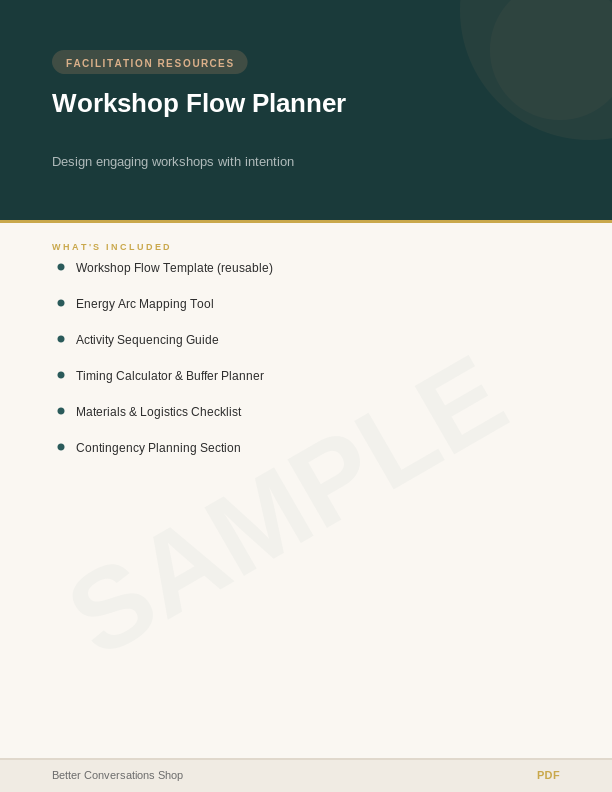
The Method Lab’s resources like the Remote Facilitation Playbook and Workshop Flow Planner demonstrate how visual structure and clear formatting make complex frameworks accessible.
Step 4: Test and Iterate Your Playbook
Before you lock it down, test it. Have someone else follow your playbook without your guidance. Where did they get stuck? What felt unclear?
Build in a review cycle, quarterly or biannually. What’s working? What’s outdated? What’s missing? A playbook that evolves stays useful.
Teaching Your Team the Playbook: Adoption Strategies That Stick
Creating a playbook is one thing. Getting people to actually use it is another.
Most rollouts fail because teams treat playbooks as reference documents instead of learning tools. Instead, structure adoption around three phases: exposure, practice, and integration.
Exposure: People need to understand the philosophy and see the plays in action. Show them how you execute a key play. Walk through your thinking. Let them see it work before they try it themselves.
Practice: Have people practice the plays in low-stakes situations. Role-play conversations. Walk through scenarios. Get feedback. Make mistakes in a safe environment where you can correct them.
Integration: Once someone’s practiced, have them execute with real clients or team members, ideally with observation and feedback. Use that data to refine both the playbook and your training approach.
Most people need 4-6 weeks of regular practice and feedback before they’re genuinely proficient.

Address the psychological barrier head-on. People resist structure because it feels like it removes autonomy or authenticity. Explain that the playbook is a foundation, not a cage. It ensures consistency while leaving room for individual style.
Real Coaching Playbook Examples Across Industries
Playbooks work differently depending on your context.
Executive coaching: Document your diagnostic process, key assessment tools, frameworks for different challenges (confidence, decision-making, delegation), and your standard engagement structure.
Sales coaching: Outline your sales methodology, key plays for different objections, your prospecting framework, and how you coach reps through specific scenarios.
Team facilitation: Document your workshop design process, standard agenda flow, key discussion frameworks, how you handle difficult group dynamics, and your debrief process. Tools like The Method Lab’s Group Discussion Guide Pack provide ready-made frameworks to build your playbook around.
Conflict resolution: Capture your intake process, how you assess the conflict, your mediation framework, key de-escalation techniques, and how you move parties toward resolution.
Leadership development: Outline your assessment methodology, core coaching frameworks, how you structure an engagement, and your success metrics.
Each playbook documents what works in that specific context. It’s your methodology, captured and made teachable.
Best Coaching Playbook Software and Tools
You can build a playbook in Google Docs or specialized software. The tool matters less than the content, but the right tool makes maintenance easier.
Digital playbook platforms let you organize content, track version changes, and update without creating new files. They’re useful if you’re managing multiple playbooks or training large teams.
Documentation tools like Notion or Confluence work well if you want something searchable and collaborative. The downside is they require setup and ongoing maintenance.
PDF-based playbooks are simpler. Create a well-organized document with a table of contents, clear sections, and visual hierarchy. It’s static but portable.
The Method Lab offers resources like the Facilitation Debrief Toolkit that can serve as components of your larger playbook system.

What matters most is that your playbook is actually used. Start with whatever format makes it easiest for your team to access and update.
Football Playbook Templates for Coaches: Principles That Translate
Football playbooks solve the problem you’re facing: how do you document complex, dynamic decision-making in a way people can actually execute?
A football playbook documents core plays, the principles behind them, and how to adapt them based on what the defense does. Each play has a name, diagram, objective, key assignments, and what success looks like.
The principles translate directly to coaching playbooks.
Clarity over comprehensiveness: Document 30-50 core plays, not 500. You run what works.
Principles-based design: Each play flows from a core principle. In coaching, it might be “ask questions before offering advice” or “build psychological safety first.”
Visual documentation: Use diagrams because they’re faster to understand than text. Decision trees, visual frameworks, conversation flows.
Iteration: Evolve your playbook quarterly or biannually, just as football teams adjust weekly.
Role clarity: Everyone knows their assignment and what they’re accountable for.
Your frameworks should work when the client is defensive, when you’re running behind schedule, when unexpected challenges emerge.
Common Mistakes That Derail Playbook Implementation
Building for the wrong audience. A playbook for corporate training looks different from one for solo practitioners. Clarify who uses it before you start.
Making it too comprehensive. A 150-page playbook becomes a reference manual no one reads. A 40-page playbook that covers your core methodology gets used.
Skipping the philosophy section. Teams need to understand the why, not just the what. Without your coaching philosophy, the plays feel arbitrary.
No version control. Use a system that makes it clear which version is current. Date everything.
Treating it as a one-time project. The launch is the beginning, not the end. Budget time for iteration.
Not training people on it. Handing someone a playbook and expecting them to learn it doesn’t work. People need guidance, practice, and feedback.
Letting it get outdated. A playbook from three years ago that doesn’t reflect how you actually work now is worse than no playbook.
The playbook that works is the one people actually use. That means it needs to be useful, accessible, and actively maintained.
Building a coaching playbook requires clarity about your methodology and discipline to document it well. The investment pays off quickly, in faster team onboarding, more consistent execution, and clearer evidence of coaching impact.
The Method Lab’s structured frameworks and ready-to-use toolkits like the Workshop Flow Planner and Remote Facilitation Playbook provide proven templates you can adapt to your specific coaching context. These resources help you build credibility with clients while giving your team the clarity they need to execute with confidence. Get your free toolkit and start building your playbook today.
Frequently Asked Questions
How do you effectively teach a new coaching playbook to your team?
Start by explaining the underlying philosophy and why each play exists. Walk through scenarios step-by-step, then have your team practice with real situations. Use visual aids and discussion guides to reinforce key concepts. The Group Discussion Guide Pack and Remote Facilitation Playbook provide structured frameworks for teaching sessions. Schedule follow-up reviews every two weeks for the first month, then monthly thereafter. Feedback loops help your team understand what works in their specific context.
What makes a coaching playbook worth the investment for a small team?
Even small teams benefit from structured frameworks that save time and build confidence in difficult conversations. A playbook eliminates guesswork about what to say next, which is especially valuable when you're managing sensitive discussions. Ready-to-use tools like The Method Lab's offerings ($16.99–$23.99) cost less than one hour of external consulting and provide reusable resources your team applies repeatedly. The ROI comes from faster decision-making, fewer coaching missteps, and consistent messaging across your organization.
How do you customize a ready-to-use playbook for your specific company culture?
Start by identifying which scenarios matter most in your environment—what difficult conversations does your team face regularly? Then adapt the language and examples to reflect your industry and values. Remove plays that don't apply and add new ones for gaps you've identified. Test the customized playbook with a small group first, gather feedback, and refine before rolling out organization-wide. Version control is critical here—document what changed and why, so your team understands the customization logic and can iterate further.
Can coaching playbooks feel robotic, or do they help you stay authentic?
A well-designed playbook provides structure without scripting every word. The framework gives you a foundation—what to cover, the order, and key questions to ask—but you deliver it in your own voice and adapt based on how the conversation unfolds. The difference is like comparing jazz improvisation to playing without any musical knowledge. The structure removes anxiety and lets your authentic presence shine through. Tools like the Facilitation Debrief Toolkit help you reflect on what felt natural and what didn't, so you refine your delivery over time.