Table of Contents
- How to Prepare for a Tough Meeting
- Master Active Listening and Perspective-Taking
- Difficult Conversation Scripts for Managers
- Examples of Difficult Conversations at Work
- Manage Your Emotions and Maintain Professional Composure
- Navigate Common Pitfalls and When to Involve HR
- Reflection and Continuous Improvement
- Frequently Asked Questions
Last Updated: August 27, 2026
How to Prepare for a Tough Meeting
Walking into a difficult conversation without preparation is like stepping into a negotiation without knowing your bottom line. You’re reactive, defensive, and likely to say things you regret. Preparation transforms you from reactive to intentional, and that shift changes everything.
Clarify Your Intention and Desired Outcome
Before you open your mouth, know exactly why you’re having this conversation. Are you trying to change behavior, gather information, repair a relationship, or set a boundary? These require completely different approaches.
Your intention shapes everything that follows: your word choice, your tone, your body language, and how you respond when the other person gets defensive. Write down your desired outcome in one sentence. What would actually constitute success for you? “I want them to understand how their behavior impacts the team” is different from “I want them to apologize.” Clarity here prevents you from moving the goalposts mid-conversation when emotions run high.
Map the Emotional Landscape
Every difficult conversation carries emotional weight, yours and theirs. Start by naming your own emotion, frustration, anxiety, disappointment, and understanding what it signals. Emotions are data. Frustration often signals that something important to you has been violated. Anxiety might mean you care about the relationship and fear damaging it.
Now consider theirs. If you’re addressing a performance issue, they might feel defensive or ashamed. If you’re delivering unexpected feedback, they might feel blindsided. Anticipating their emotional state helps you prepare language that creates psychological safety rather than triggering defensiveness.
Master Active Listening and Perspective-Taking
Active listening is the most underrated skill in difficult conversations. Real active listening means understanding the other person’s perspective fully before you defend your own. This doesn’t mean you agree with them, it means you understand them well enough that you could explain their position back to them and they’d say, “Yes, that’s exactly what I meant.”

Active listening requires asking open-ended questions and resisting the urge to interrupt or defend. When someone says something you disagree with, ask clarifying questions instead: “Help me understand what you mean by that” or “Can you give me an example of when that happened?” These questions give you more information and signal that you’re genuinely trying to understand, not just waiting for your chance to argue.
Reflective listening, repeating back what you heard, is transformative. When someone feels truly heard, their defensiveness often drops (peer-reviewed research). Try saying, “What I’m hearing is that you felt excluded from the decision. Is that right?” This shows you were paying attention, gives them a chance to clarify, and creates connection in what might otherwise feel like an attack.
Perspective-taking goes deeper. It’s understanding their experience, not just their words. Why might they have acted this way? What pressures or constraints were they operating under? This doesn’t excuse poor behavior, but it contextualizes it. Context transforms a conversation from “You did something wrong” to “Here’s what happened and how we move forward.”
Difficult Conversation Scripts for Managers
Scripts aren’t word-for-word recitations, they’re frameworks that keep you on track when emotions rise and help you hit key points.
Opening with Clarity and Safety
Your opening sets the tone for the entire conversation. A strong opening names the topic directly, signals your intent is collaborative not punitive, and creates psychological safety:
“I want to talk with you about [specific situation]. I’m bringing this up because [your genuine reason]. I’m not here to tell you you’re wrong. I want to understand your perspective and figure out what we do next.”
This is direct about the topic with no dancing around it. It signals genuine intent and explicitly invites their perspective. For remote conversations, be even more explicit about your collaborative intent.
Delivering the Core Message
Vague feedback creates confusion and defensiveness. Specific feedback creates the possibility of change. Avoid accusatory “you” statements like “You’re not a team player.” Instead, describe specific behavior and its impact: “In the last three meetings, you’ve interrupted others multiple times. When that happens, people stop sharing ideas, and we lose valuable input.”
Use this framework: “When [specific behavior], the impact is [specific consequence]. I want to understand what’s going on from your perspective, and I want to work together on [desired outcome].”
Example: “When deadlines are missed without communication, the team has to scramble to cover the gap, and clients see delays. I want to understand what’s getting in the way, and I want to figure out how we can set you up for success.”
Closing with Accountability and Next Steps
A strong close confirms shared understanding, establishes clear next steps, and signals that the relationship continues:
“So here’s what I’m hearing: [summarize their perspective]. And here’s what I need from you going forward: [specific behavior change or action]. Let’s check in on [specific date] to see how this is working. I’m here if you need support, and I want you to know I’m invested in your success.”
This is concrete, shows you listened, establishes accountability without shame, and signals that this conversation is about moving forward.
Examples of Difficult Conversations at Work
Performance Issues and Missed Expectations
These conversations address work that isn’t meeting standards or commitments aren’t being delivered. The key is separating the person from the performance. “Your work on this project fell short of what we need” is different from “You’re not capable.” One is about a specific deliverable; the other is a character judgment.
Start by understanding their perspective. Maybe they didn’t have the resources they needed or expectations weren’t clear. Understanding doesn’t excuse the missed expectation, but it contextualizes it and often reveals what needs to change. Then be explicit about what success looks like going forward, specific standards, timeline, and support you’ll provide.
Interpersonal Conflict Between Team Members
When two people on your team aren’t getting along, meet with each person separately first. This prevents gang-up dynamics and lets each person speak freely. Listen fully to their perspective without defending the other person or dismissing their concerns.
If needed, bring them together with ground rules: we’re here to understand each other and find a path forward, not to win or prove who’s right. Have each person explain their perspective while the other listens without interrupting. Often, once people feel truly heard, they’re willing to move forward.
Remote and Virtual Difficult Conversations
Virtual conversations present unique challenges. You lose body language cues and misunderstandings happen more easily. Prepare even more thoroughly. Test your technology beforehand and choose a quiet, private space.
Start with a moment of human connection before diving into the difficult topic. During the conversation, be intentional about creating space for the other person to talk. Ask explicitly: “What’s your take on this?” or “I want to make sure I’m not missing something, what would you add?” Watch for signs of shutdown or strong emotion that might be harder to read on screen.
Manage Your Emotions and Maintain Professional Composure
Your emotional state during a difficult conversation is contagious (apa.org). If you’re angry, they’ll get defensive. If you’re calm and grounded, they’re more likely to be too.

Start with self-awareness. Notice when you’re getting triggered and what the physical sensation is, tightness in your chest, heat in your face, tension in your jaw. Your body gives you early warning signals before your emotions take over.
When you feel triggered, pause. Take a breath. A few seconds of pause gives your nervous system a chance to regulate (peer-reviewed research). Have a reset strategy ready, taking a sip of water, pressing your feet into the ground, or deliberate breathing. Find what works for you and practice it beforehand.
Maintaining professional composure means staying grounded enough to think clearly, listen fully, and respond intentionally rather than react emotionally.
Navigate Common Pitfalls and When to Involve HR
The most common pitfall is letting the conversation become personal. You start talking about behavior and somehow end up attacking character. The moment you make it personal, you’ve lost them.
Another pitfall is not listening. You deliver your script and leave without actually hearing what the other person has to say. Difficult conversations are conversations, not speeches.
A third pitfall is vagueness. “I’m concerned about your performance” leaves the other person confused and defensive. “In the last month, you’ve missed two deadlines and submitted work with errors that required revision” is clear.
Involve HR if there’s potential legal risk (discrimination, harassment, safety issues), if the situation involves substance abuse or mental health crisis, if the person is becoming threatening, or if this is a formal disciplinary action that needs documentation. Also involve HR if you’re unsure about your legal standing.
Reflection and Continuous Improvement
After a difficult conversation, reflect on what happened. What went well? What was harder than expected? What would you do differently next time?
Check in on the outcome. Did the conversation achieve what you wanted? Sometimes you realize you need to follow up or approach something differently. Reflect on the relationship too. Did the conversation damage it or strengthen it? Most well-handled difficult conversations actually strengthen relationships because they build trust and clarity.
This continuous improvement mindset is what separates managers who get better at difficult conversations from those who keep repeating the same mistakes.
Difficult conversations are never comfortable. But they’re also never as bad as you fear when you approach them with preparation, genuine intent, and a commitment to understanding the other person. The difference between a conversation that damages a relationship and one that strengthens it often comes down to structure and clarity.
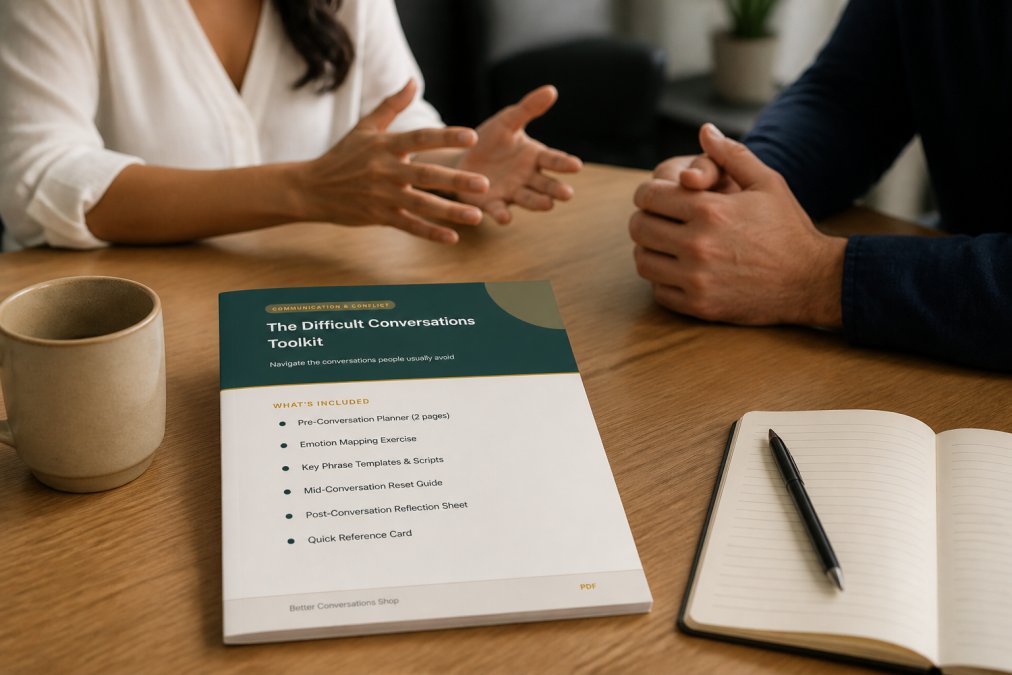
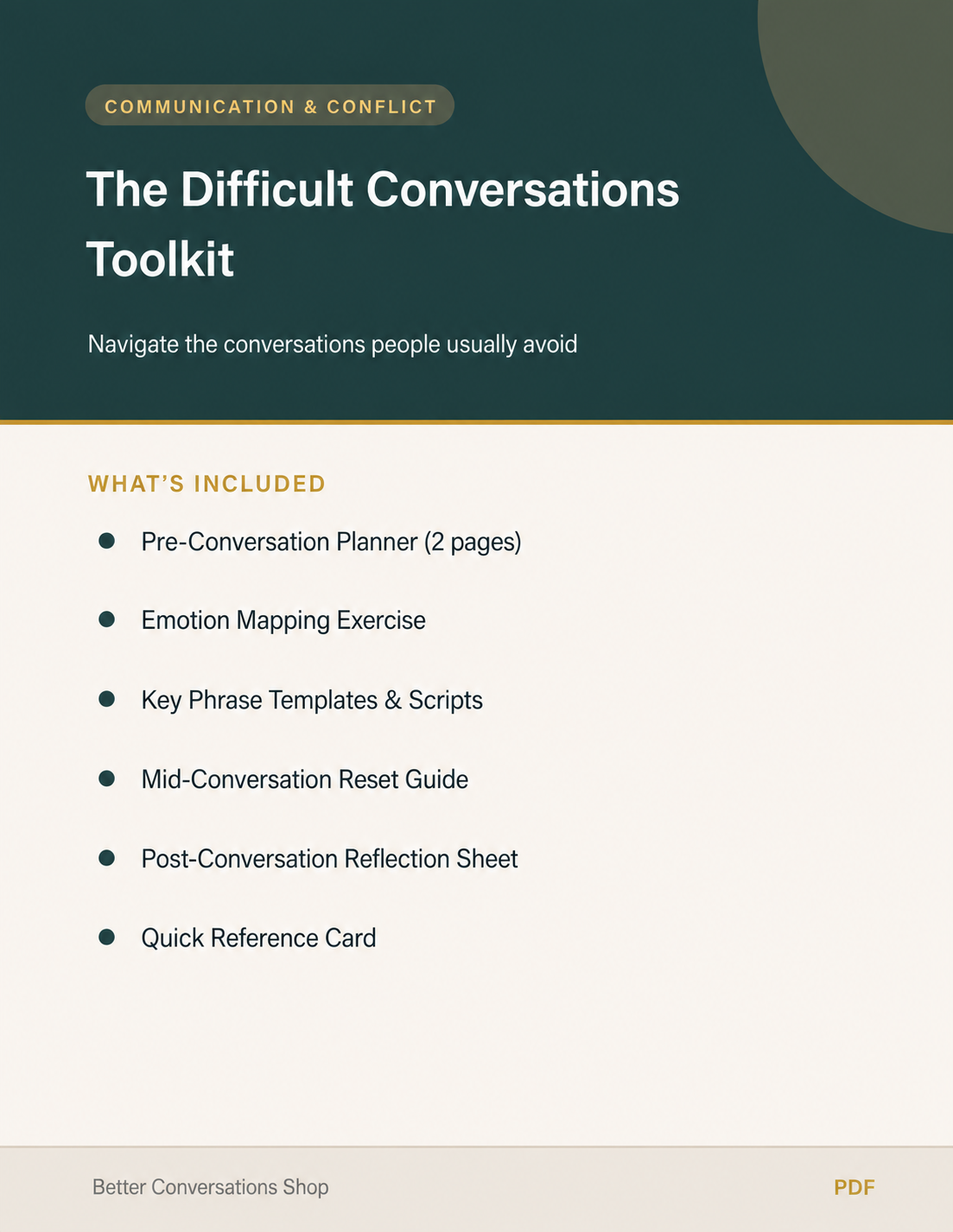
Get your free toolkit from The Method Lab. The Difficult Conversations Toolkit provides pre-conversation planners, emotion mapping exercises, key phrase templates, and post-conversation reflection sheets designed specifically for high-stakes conversations. With practical frameworks built for real workplace dynamics, you’ll navigate these moments with confidence and build the professional credibility that comes from handling difficult situations well.
Frequently Asked Questions
How do you prepare for a difficult conversation at work?
Start by clarifying your intention and the specific outcome you want. Map the emotional landscape by considering how the other person may react and what concerns they might raise. Document the facts, separate them from your interpretation, and decide which points are non-negotiable. Use a preparation framework like The Difficult Conversations Toolkit to structure your thoughts, anticipate objections, and plan your opening statement. This reduces anxiety and keeps you focused during the actual conversation.
What are examples of difficult conversations at work?
Common difficult conversations include delivering critical performance feedback, addressing missed deadlines or quality issues, managing interpersonal conflict between team members, discussing salary or promotion decisions, and handling behavioral concerns. Remote conversations add complexity because non-verbal cues are limited. Each scenario requires different preparation: performance issues need documented evidence, conflicts need stakeholder perspective-taking, and remote conversations need extra clarity about tone and intent to prevent misinterpretation.
What difficult conversation scripts work best for managers?
Effective scripts follow a structure: open with psychological safety and clarity of intent, state the issue using ‘I’ statements and neutral language, invite the other person’s perspective, listen without interrupting, and close with clear accountability and next steps. For example, opening with ‘I want to discuss how the last project deadline was missed. I’m bringing this up because it affects our team’s credibility’ sets a non-adversarial tone. Scripts prevent you from getting emotional or defensive, but they should sound natural, not robotic. Customize templates to your voice and situation.
When should you involve HR in a difficult conversation?
Involve HR when the conversation involves potential policy violations, discrimination, harassment, or legal risk. Also escalate if previous informal conversations haven’t resolved the issue or if the employee’s behavior is escalating. HR can help you document the conversation, ensure compliance, and provide guidance on next steps like performance improvement plans or disciplinary action. For cultural or neurodiversity considerations that might affect how someone receives feedback, HR can also help tailor your approach to be more inclusive and effective.