

Table of Contents
- What Are Coaching Frameworks for Professional Development?
- The GROW Model: Goal, Reality, Options, Will
- The CLEAR Model for Coaching Conversations
- The OSKAR Model: Building Solutions and Scaling Success
- How Long Should a Coaching Session Be?
- Best Practices for Workplace Coaching Implementation
- Choosing the Right Framework for Your Organization
- Conclusion
Last Updated: August 13, 2026
What Are Coaching Frameworks for Professional Development?
Coaching frameworks are structured methodologies that guide conversations between coaches and clients toward measurable behavioral change and skill acquisition. They provide a clear roadmap that creates consistency, accountability, and clarity about what success looks like.
A coaching framework typically includes a sequence of questions, decision points, and reflection prompts designed to move a client from awareness to action. The most effective frameworks emphasize active listening over advice-giving, move clients toward self-discovery rather than imposed solutions, and build in accountability mechanisms so conversations translate into real behavioral change. According to research on coaching efficacy and professional development outcomes, structured coaching conversations produce measurable improvements in leadership effectiveness, employee engagement, and skill acquisition compared to informal mentoring alone.
Different frameworks work for different contexts. A framework designed for executive presence coaching won’t necessarily work for performance improvement conversations. Knowing which framework to deploy, and when, separates coaches who build sustainable client relationships from those who cycle through clients without demonstrating clear value.
The GROW Model: Goal, Reality, Options, Will
The GROW model remains the most widely recognized coaching framework because it mirrors how people naturally solve problems. GROW stands for Goal, Reality, Options, and Will, four sequential phases that move a client from defining what they want to committing to specific actions.
Goal establishes clarity about what success looks like. The coach asks: What does success look like? What are you trying to achieve? This isn’t about vague aspirations but specific, measurable outcomes. A client might start with “I want to be a better leader,” but effective goal-setting narrows that to “I want to improve my team’s engagement scores by 15% in the next quarter.”

Professional coach and client seated across from each other in a modern office setting with natural light, both holding notebooks, engaged in active listening with focused attention
Reality is the honest assessment phase where the coach helps the client see the current state without judgment. What’s actually happening now? What gaps exist between where they are and where they want to be? Effective coaches sit with the reality and help clients see patterns they’ve been missing. If a client wants to improve team engagement but hasn’t conducted a single one-on-one conversation in three months, that’s the reality that matters.
Options expands the client’s thinking about possible paths forward. Rather than the coach suggesting solutions, the coach asks: What could you try? What have you seen work in similar situations? This phase generates possibilities and expands the client’s sense of agency and choice.
Will is the commitment phase where the client articulates specific actions they’ll take, by when, and how they’ll know it’s working. This is where accountability lives. Without this phase, coaching conversations remain interesting but produce no behavioral change.
The CLEAR Model for Coaching Conversations
Where GROW focuses on problem-solving, the CLEAR model emphasizes continuous improvement and systemic thinking. CLEAR stands for Contracting, Listening, Exploring, Action, and Review, a framework that builds in feedback loops and ongoing accountability.
Contracting happens at the beginning of a coaching relationship. What are we here to accomplish? What’s in scope, what’s out of scope? What are the boundaries of confidentiality? Contracting prevents misalignment and sets expectations.
Listening is active listening that goes beyond hearing words to understanding the emotions, assumptions, and beliefs underneath them. The coach listens for what’s said and what’s not said, noticing patterns and what the client cares deeply about.
Exploring digs into the client’s situation with curiosity. What’s driving this challenge? What have you already tried? Unlike GROW’s options phase, exploring in CLEAR tends to be more investigative, helping the client understand the roots of their challenge.
Action is where the client commits to specific steps with structured planning and resource identification. What support do you need? What obstacles might arise? How will you know you’re on track?
Review is the accountability loop built into the rhythm of the coaching relationship, allowing you to adjust actions based on what’s working and keep the coaching dynamic rather than static.
The CLEAR model works particularly well for ongoing coaching relationships where you’re building trust over time and addressing complex, multi-layered challenges.
The OSKAR Model: Building Solutions and Scaling Success
The OSKAR model takes a solution-focused approach, emphasizing what’s working and how to build on it rather than analyzing what’s broken. OSKAR stands for Outcome, Scaling, Knowledge, Affirm, and Review.
Outcome asks the client to imagine success. If this challenge were solved, what would be different? Solution-focused coaching assumes that clients have more resources and capability than they realize, they just need help seeing what’s possible.
Scaling explores what’s already working. What are you already doing well? Where do you see progress? The coach helps the client notice and amplify existing strengths rather than starting from deficit.
Knowledge invites the client to draw on their own expertise and experience. What do you already know about solving this? This phase honors the client’s intelligence rather than positioning the coach as the expert with answers.
Affirm highlights the client’s strengths and capabilities with grounded affirmation that helps the client access confidence and agency.
Review establishes accountability and next steps. What will you do? By when? How will you track progress?
OSKAR works exceptionally well with clients who are demoralized or stuck in problem-focused thinking. It’s less effective for clients who need clear structure around complex problems or who are in denial about real obstacles.
How Long Should a Coaching Session Be?
Most one-on-one executive coaching sessions run 45 to 60 minutes, allowing for adequate depth without mental fatigue. Shorter sessions, 30 minutes, work for quick check-ins but rarely allow for the exploration that produces behavioral change. Longer sessions, 90 minutes or more, can work for intensive engagements but risk diminishing returns as attention spans fade.
Group coaching sessions often run 60 to 90 minutes because multiple voices need to be heard and dialogue needs time to emerge. Shorter group sessions feel rushed; longer ones require skilled facilitation to maintain engagement.
Frequency matters as much as length. Weekly 45-minute sessions often produce better results than monthly 90-minute sessions because they create consistent momentum and accountability. Research on behavioral change and habit formation suggests that frequency and consistency matter more than session length.
If your session is running long, it often means you’re trying to accomplish too much in one conversation. That’s a signal to narrow scope, not extend time. A focused 45-minute conversation that produces a clear commitment beats a wandering 90-minute conversation that leaves the client uncertain about next steps.
Best Practices for Workplace Coaching Implementation
Implementing coaching frameworks in an organizational setting requires culture, systems, and accountability.

Manager leading a coaching conversation with a team member in a modern office setting, both seated and focused on each other with attentive body language, natural office lighting
Start with clarity about what coaching is and isn’t. Many organizations confuse coaching with mentoring, advising, or managing. Coaching is specifically about facilitating self-discovery and behavioral change through structured conversation. If your leaders think coaching means telling people what to do, your coaching program will fail.
Train coaches on facilitation first. A coach who knows the GROW model but can’t listen actively will produce mediocre results. Facilitation skills, active listening, powerful questioning, and noticing what’s not being said are foundational. The framework is just the structure; the coach’s presence and skill create change.
Build accountability into the system. Coaching conversations are easy to deprioritize when other work feels urgent. Organizations that see coaching results have built-in accountability: scheduled sessions that aren’t canceled, follow-up commitments that are tracked, and measurement systems that show coaching impact. The Method Lab’s Coaching Outcomes & Impact Measurement Kit provides coaches with pre- and post-engagement measurement systems that demonstrate ROI.
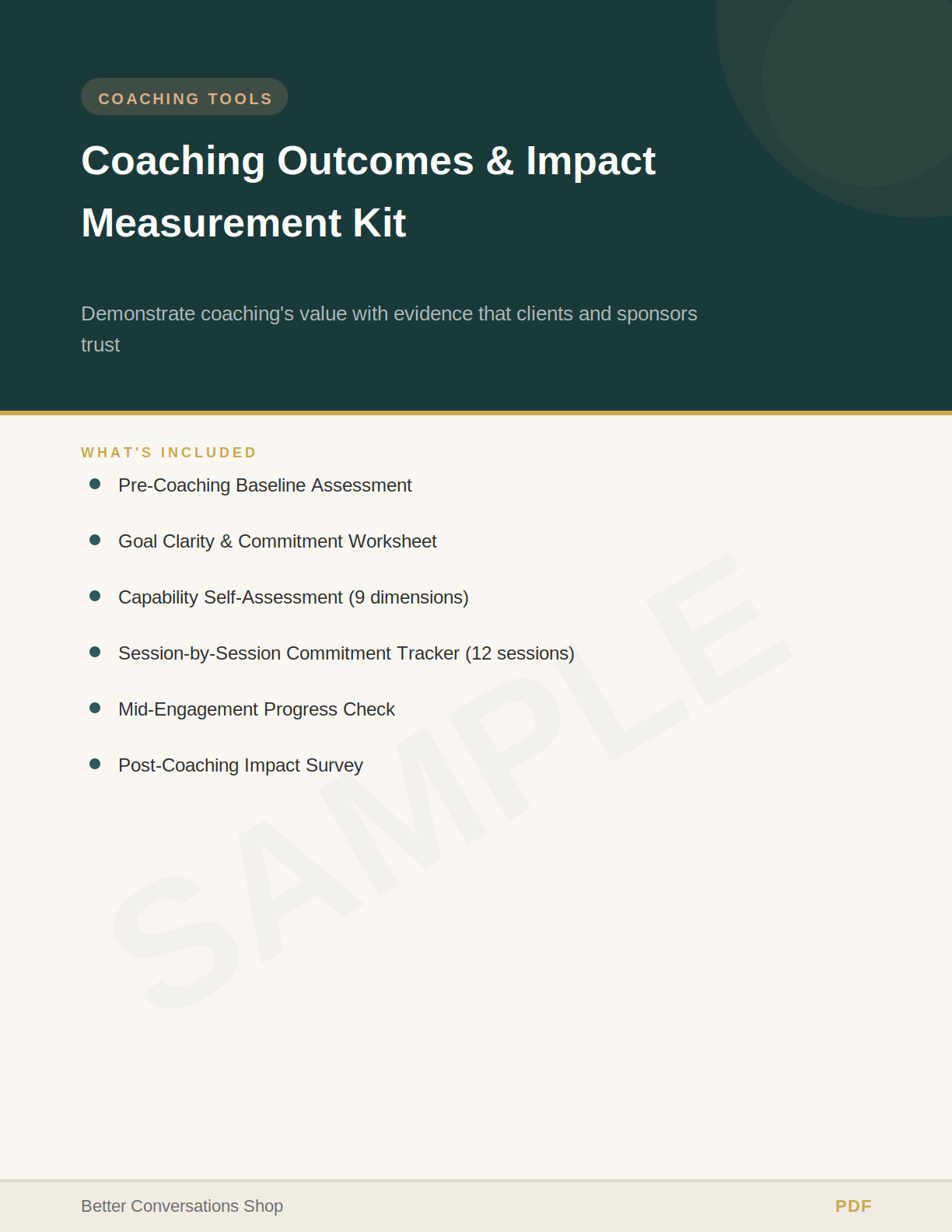
Coaching Outcomes & Impact Measurement Kit
Create psychological safety. Coaching requires vulnerability. Clients need to trust that what they share won’t be used against them. This means clear confidentiality agreements, consistent follow-through on commitments, and a coaching culture where admitting struggle is seen as strength.
Measure what matters. Many organizations measure coaching activity (number of sessions, number of coaches trained) rather than coaching impact (behavioral change, performance improvement, retention). Impact metrics are harder to measure but essential for justifying coaching investment.
Integrate coaching into the leadership rhythm. Coaching works best when it’s part of how the organization operates, not an add-on. Weave coaching into onboarding for new leaders, performance management conversations, succession planning, and leadership development programs.
|
Best Practice |
Implementation |
Expected Outcome |
|---|---|---|
|
Clear definition of coaching |
Train leaders on what coaching is vs. mentoring/managing |
Realistic expectations and proper use of coaching time |
|
Facilitation skills training |
Invest in active listening and questioning skills before frameworks |
Higher-quality conversations and better client outcomes |
|
Built-in accountability |
Schedule sessions, track follow-up, measure impact |
Consistent coaching adoption and sustained behavior change |
|
Psychological safety |
Establish confidentiality agreements and trust-building practices |
Clients willing to be vulnerable and engage authentically |
|
Impact measurement |
Track behavioral change and performance metrics, not just activity |
Organizational buy-in and sustained investment in coaching |
|
Integration into leadership rhythm |
Weave coaching into onboarding, performance management, development |
Coaching becomes normalized, not deprioritized |
Choosing the Right Framework for Your Organization
Different frameworks serve different purposes. Choosing the right one depends on your coaching context, your client population, and the behavioral change you’re trying to catalyze.
Use GROW when: Your clients are self-aware, motivated, and stuck on execution. They know what they want to achieve but aren’t sure how to get there. GROW is excellent for performance improvement conversations and goal-setting sessions.
Use CLEAR when: You’re building an ongoing coaching relationship where trust and depth matter. Your clients are dealing with complex, multi-layered challenges that require investigation and continuous refinement. CLEAR works well for executive coaching and organizational change.
Use OSKAR when: Your clients are demoralized or stuck in problem-focused thinking. You need to shift their energy from “what’s wrong” to “what’s possible.” OSKAR works well for career transition coaching and situations where you’re rebuilding confidence.
The truth most coaching guides miss: your framework choice matters less than your skill in executing it. A skilled coach using any framework will produce results. That said, matching framework to context increases your odds of success.
The three core frameworks above (GROW, CLEAR, OSKAR) cover the vast majority of coaching situations. Master these before chasing proprietary alternatives.
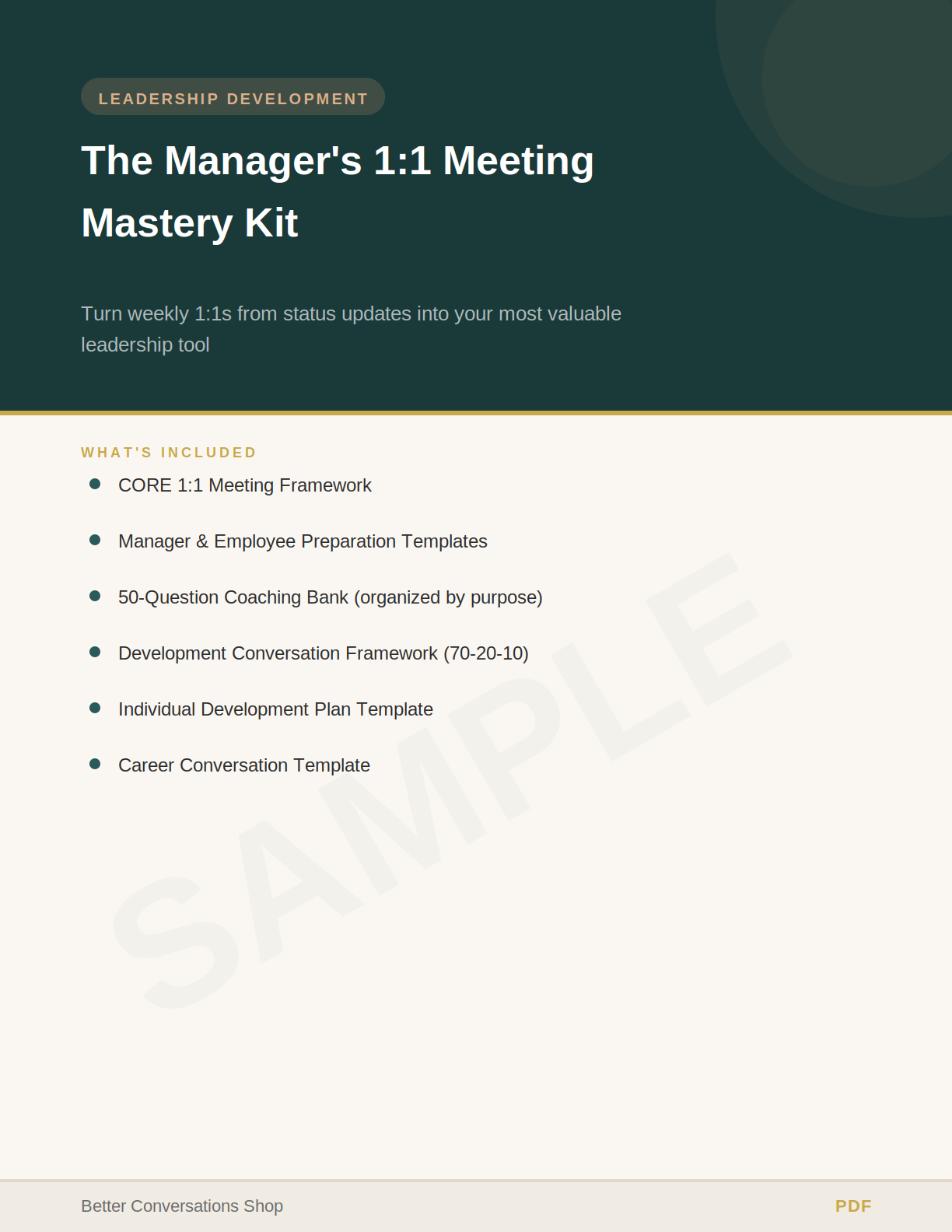
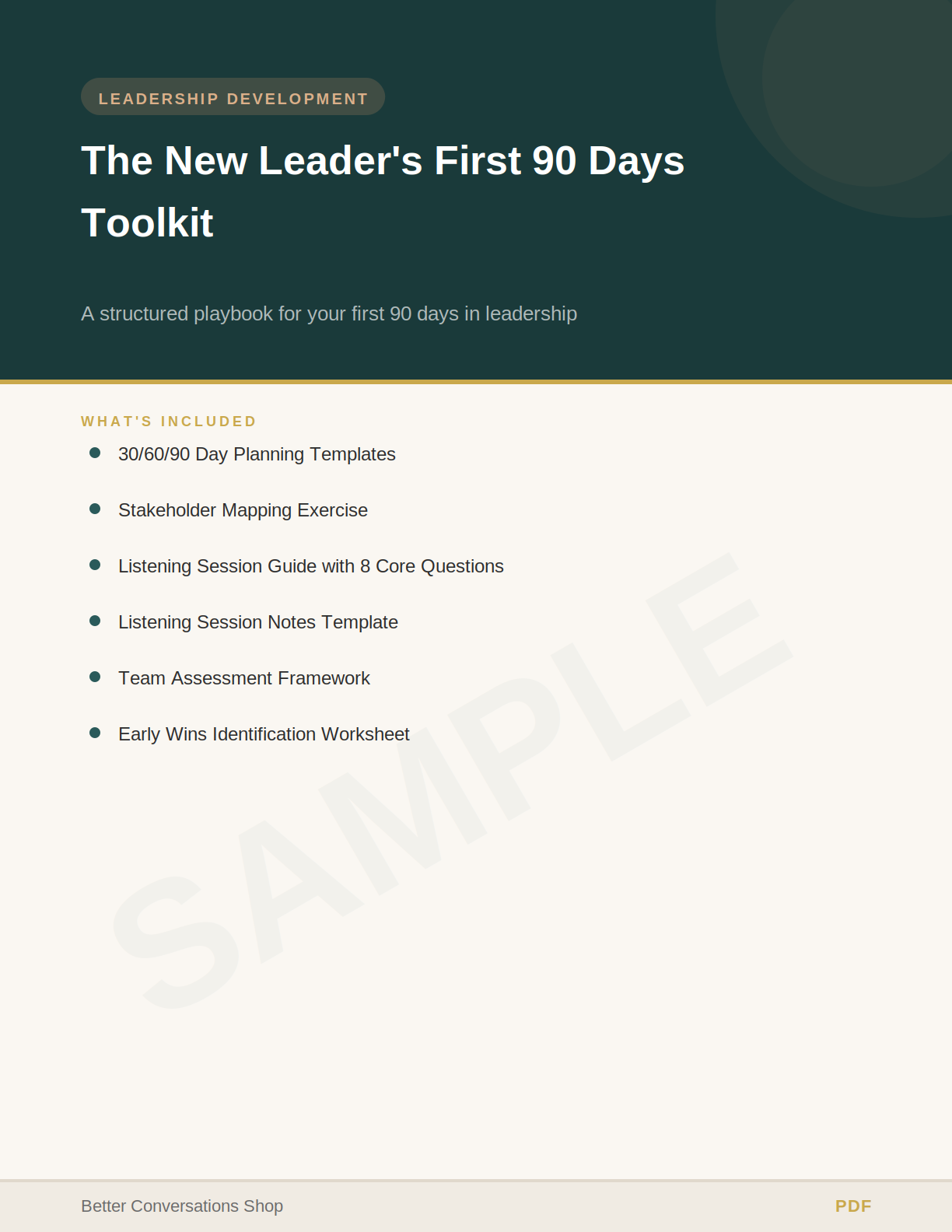
The Method Lab provides structured resources for implementing these frameworks in your organization. The Manager’s 1:1 Meeting Mastery Kit includes a proven CORE framework specifically designed for manager-to-employee coaching conversations, with question banks and accountability tools built in. For leaders new to coaching, The Method Lab’s New Leader’s First 90 Days Toolkit provides structured guidance on establishing credibility through coaching conversations during the critical transition period.
Coaching frameworks for professional development transform conversations from well-intentioned support into strategic interventions with measurable outcomes. The frameworks themselves are tools. The real work is building the facilitation skills, the organizational culture, and the accountability systems that turn frameworks into results.
Start by choosing a framework that matches your context, invest in facilitation training before worrying about framework mastery, and build measurement into your process from the beginning. Access ready-to-use coaching conversation guides and implementation resources from The Method Lab to make these frameworks immediately actionable in your organization.
Frequently Asked Questions
What are the most effective coaching frameworks for employee development?
The GROW, CLEAR, and OSKAR models are the most widely used coaching frameworks for professional development. GROW excels at goal-setting and problem-solving. CLEAR focuses on collaborative, emotionally intelligent conversations. OSKAR emphasizes solution-building and scaling success. The best framework depends on your coaching context, client readiness, and organizational culture. Many coaches combine elements from multiple frameworks to match specific coaching situations.
How do you choose the right coaching model for professional growth?
Start by assessing your client's primary need: goal clarity (GROW), relationship-building (CLEAR), or solution-focus (OSKAR). Consider your organization's culture and whether you need a directive or facilitative approach. New coaches benefit from mastering one framework deeply before blending approaches. Test each model with a few coaching engagements and gather feedback from clients. The right framework feels natural to your coaching style while delivering measurable behavioral change and accountability for your clients.
Can coaching frameworks be applied to remote team development?
Yes, all major coaching frameworks adapt well to remote settings. GROW, CLEAR, and OSKAR work effectively in virtual one-on-ones and group coaching sessions. Success requires intentional structure: clear agendas, active listening without in-person cues, written follow-ups, and accountability checkpoints. Remote coaching often benefits from written coaching conversation templates and prep workbooks that help clients reflect between sessions. Video calls preserve the relational elements that make coaching effective, though some coaches find asynchronous written coaching useful for distributed teams.
What are the core components of a successful professional development coaching session?
Effective coaching sessions include: structured opening (context-setting), active listening and strategic questioning, clear goal definition or problem clarification, exploration of options or solutions, commitment to action, and accountability follow-up. The session should balance coach guidance with client self-reflection. Most successful sessions run 45-60 minutes and include pre-session preparation and post-session accountability tracking. Using a consistent framework ensures every session builds on previous work and creates measurable progress toward developmental milestones.
What makes a coaching framework different from a coaching style?
A coaching framework is a structured methodology with specific steps and questioning sequences (GROW, CLEAR, OSKAR). A coaching style is how you show up relationally—directive, facilitative, collaborative, or direct. You can use any framework with any style. For example, a coach might apply the GROW model with a highly facilitative approach or a more directive approach depending on client needs. Frameworks provide structure and consistency; style provides authenticity and relationship quality. The best coaching combines a proven framework with a style that feels genuine to you.
