Table of Contents
- Essential Coaching Resources for Leadership Development Consultants
- Leadership Coaching Assessment Tools That Drive Results
- Leadership Development Program Templates and Frameworks
- Executive Coaching Best Practices for High-Impact Engagements
- Measuring Leadership Coaching Effectiveness and ROI
- Virtual and In-Person Facilitation Resources
- Vetting Consultants and Building Your Resource Toolkit
- Conclusion
Coaching Resources for Leadership Development Consultants
Last Updated: August 4, 2026
Essential Coaching Resources for Leadership Development Consultants
Organizations investing in structured coaching resources for leadership development consultants see measurable improvements in executive performance and team engagement. Yet many consultants rely on ad-hoc frameworks rather than polished, client-ready tools. The difference between high-impact coaching engagements and those that fall flat comes down to having the right resources in place before the conversation starts.
Coaching resources aren’t just templates, they’re structured systems that help you demonstrate value, build credibility, and navigate complex conversations with confidence. Whether you’re onboarding a new leader, facilitating difficult team conversations, or measuring impact, the frameworks you use determine whether clients see real change or just go through the motions.
Below are the essential resources every consultant needs: assessment tools that reveal what’s holding leaders back, development program templates that create accountability, best practices for high-stakes engagements, and proven methods for measuring ROI so you can justify your investment and scale your practice.
Leadership Coaching Assessment Tools That Drive Results
Assessment tools form the foundation of effective coaching. They move conversations from subjective impressions to data-backed insights, separating amateur coaching from professional-grade work. The right assessment reveals patterns, blind spots, and behavioral shifts that move the needle on leader effectiveness.

360-Degree Feedback Assessments
A 360-degree feedback assessment collects input from direct reports, peers, supervisors, and self-perception to create a comprehensive view of a leader’s impact. This gold standard for executive coaching surfaces blind spots that self-assessment alone cannot reveal.
The Center for Creative Leadership offers research-backed 360 assessments like the Benchmarks suite, with decades of normative data. A leader’s results are contextualized against thousands of other leaders in similar roles. Center for Creative Leadership leadership assessments provides tools designed for development, not selection, framing feedback for growth rather than judgment. The Benchmarks for Managers™ assessment costs $380.00 for 1-10 units, and the Benchmarks for Executives™ assessment costs $425.00 for 1-10 units.
The Leadership Circle Profile goes beyond behavioral feedback to reveal underlying mindsets driving or limiting effectiveness. This distinction matters because behavioral change without mindset shift rarely sticks. Leadership Circle Profile Certification costs $4,395.00. 360 assessments work best when administered by a certified facilitator who helps leaders interpret results without defensiveness.
Behavioral and Strengths-Based Assessments
Behavioral assessments like Everything DiSC Work of Leaders and Gallup CliftonStrengths take different angles. DiSC focuses on how a leader’s natural style impacts vision-setting, alignment, and execution. The Everything DiSC Work of Leaders assessment costs $150.00 for 1-9 assessments. CliftonStrengths emphasizes talent themes and building on natural strengths rather than obsessing over weaknesses. The CliftonStrengths Top 5 assessment costs $24.99, and the CliftonStrengths 34 assessment costs $59.99.
Strengths-based assessments are particularly valuable early in coaching relationships because they build psychological safety. Leaders who start by understanding their top talent themes feel more open to feedback. If a client is demoralized, lead with CliftonStrengths to rebuild confidence. If a leader struggles with team dynamics, the 360 or DiSC provides more actionable insight.
Leadership Development Program Templates and Frameworks
Templates ensure consistency and help you build a repeatable methodology that clients trust and refer. This is how consultants scale without sacrificing quality.
Structured Coaching Session Preparation
Preparation separates effective coaches from mediocre ones. The Coaching Session Prep Workbook at The Method Lab provides a 12-week guided reflection structure that helps coaches and leaders think deeply about what’s happening before each session.
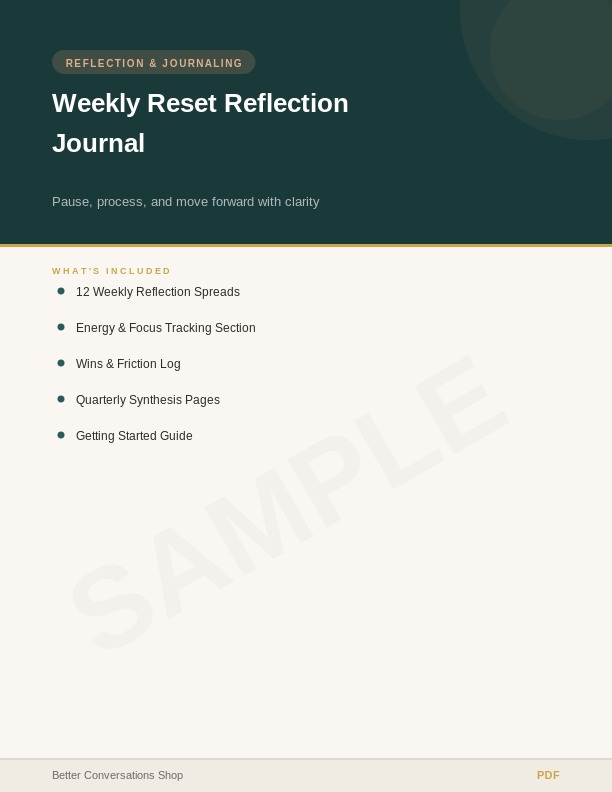
A solid session prep framework includes reviewing progress on previous commitments, identifying the most pressing challenge, clarifying what success looks like, and preparing specific scenarios the leader wants to practice. Without this structure, sessions drift into surface-level updates rather than deep work.
The most effective consultants use a consistent opening question: “What’s the one thing that, if we solved it today, would shift how you’re leading?” This focuses the session on impact rather than covering everything.
First 90 Days and Onboarding Frameworks
New leaders in their first 90 days are in a critical window. Leaders who establish credibility early outperform those who don’t by significant margins.
The Method Lab’s New Leader’s First 90 Days Toolkit breaks the onboarding period into three phases: listening and learning (Days 1-30), building relationships and understanding culture (Days 31-60), and making strategic moves (Days 61-90).
Each phase has specific milestones. In the first month, a new leader should meet one-on-one with every direct report, understand the org chart and key relationships, and learn unwritten rules. By day 60, they should identify the top three strategic priorities and build credibility with stakeholders. By day 90, they’re ready to make visible changes that signal their leadership style. Without this framework, new leaders either move too fast and alienate people or move too slow and lose momentum.
Executive Coaching Best Practices for High-Impact Engagements
Coaching methodology matters less than execution. Two coaches using the same framework produce different results based on how skillfully they navigate relationships, ask questions, and hold clients accountable.
Building Executive Presence and Communication
Executive presence is a learnable skill built on clarity, structure, and authentic confidence. The real components are: strategic thinking (understanding how decisions affect the business), clear communication (saying what you mean without hedging), and emotional intelligence (reading the room and adjusting).
The Executive Communication Mastery Guide at The Method Lab breaks these into teachable elements. Practical coaching involves recording a leader in a real meeting, reviewing footage together, and identifying specific moments where communication landed or fell flat. Executives improve fastest when they see themselves.
The Executive Presence & Leadership Brand Guide helps leaders clarify their leadership brand: what they want to be known for, how they want to be perceived, and what behaviors reinforce that perception. This clarity makes every subsequent coaching conversation more focused.
Managing Difficult Conversations and Team Dynamics
Most leaders avoid difficult conversations until they become crises. Your job is to help them practice these conversations in a safe environment before they happen in real time.
The Performance Review Conversations Toolkit provides a structure for feedback conversations that actually change behavior. It focuses on the conversation itself, exact words, sequencing, handling defensiveness, rather than just the form.
Team dynamics coaching requires observing how a leader’s behavior affects the team system. The Group Discussion Guide Pack provides 20 themed discussion guides that move groups from surface-level sharing to genuine insight about working relationships.
Measuring Leadership Coaching Effectiveness and ROI
This is where most coaching falls apart. Consultants deliver great work but can’t prove it, so clients don’t renew and referrals dry up. Measurement is how you build a sustainable practice.

Outcome Tracking and Impact Measurement
The Coaching Outcomes & Impact Measurement Kit provides a system for tracking what actually changes as a result of coaching. This measures business outcomes, not just satisfaction.
Start with baseline metrics before coaching begins: direct report engagement scores, internal promotion rate, team retention, project delivery speed, or business unit revenue growth. After 90 days, measure the same metrics. The difference is your impact.
Build a simple tracking system into every engagement. At the start, agree on 2-3 metrics that matter to the client’s business. Check in monthly. At the end, show the data. This becomes your proof point for future clients and justifies your fees.
Virtual and In-Person Facilitation Resources
Most leaders now expect flexibility between remote and in-person coaching. Virtual facilitation is fundamentally different from in-person work, energy, body language, technical glitches, and attention spans all change the game.
The Remote Facilitation Playbook addresses these dynamics. It covers creating engagement in a Zoom room, when to use breakout sessions, reading energy when you can’t see the full room, and handling technical failures.
Key principles for virtual facilitation: shorter segments (20-30 minutes max before a break), more frequent interaction (polls, chat, breakout discussions), and deliberate relationship-building at the start. For in-person work, the Facilitation Debrief Toolkit provides post-session reflection. After facilitating a workshop, debrief what worked, what fell flat, and what you’d do differently. This continuous improvement cycle separates consultants who get better from those who repeat the same delivery year after year.
Vetting Consultants and Building Your Resource Toolkit
If you’re hiring other coaches or building a team, vetting is critical. You’re only as strong as the weakest person representing your work.
What to Look for in Coaching Certifications
The International Coach Federation (ICF) accreditation is the industry standard. International Coach Federation standards sets rigorous requirements for training hours, supervised practice, and continuing education. If a coach has an ICF credential, they’ve met a baseline standard.
Look for certifications that include supervised practice. A coach trained but never observed is like a pilot who studied aerodynamics but never flew. When vetting potential team members, ask for their ICF credential level, examples of coaching work (with confidentiality maintained), and client references. Don’t hire based on credentials alone, hire based on their ability to think on their feet and stay present in complex moments.
Pricing Models and Transparency
Pricing transparency builds trust. The Method Lab’s pricing is straightforward: individual tools and toolkits range from $16.99 to $33.99. This transparency means clients know what they’re getting and why.
For your own practice, consider tiered pricing: entry-level packages for emerging leaders, mid-market packages for managers, and premium packages for C-suite work. Each tier should include specific deliverables. The most successful consultants charge premium rates because they prove their impact. If you’re struggling to justify fees, the problem isn’t pricing, it’s that you haven’t built measurement systems demonstrating your value.
Conclusion
The gap between good coaching and great coaching is rarely methodology. It’s whether you have structured resources that build credibility, create accountability, and generate measurable results. Consultants who invest in polished frameworks, assessment tools, and outcome tracking deliver better work, attract better clients, and command higher fees.
The Method Lab provides client-ready resources designed for high-stakes leadership conversations. From executive communication and first 90-day frameworks to outcome measurement systems and facilitation debriefs, these tools give you the structure to demonstrate value and scale impact. Start with one toolkit addressing your most common client challenge, build the measurement system around it, and watch how quickly your practice transforms.
The Method Lab coaching resources
|
Resource Type |
Best For |
Implementation Time |
ROI Signal |
|---|---|---|---|
|
360-Degree Feedback |
Revealing blind spots in executive presence |
2-3 weeks for full cycle |
Shift in direct report engagement scores |
|
First 90 Days Framework |
New leaders establishing credibility |
90 days structured |
Early stakeholder feedback and internal visibility |
|
Communication Mastery Guide |
Improving clarity and executive presence |
4-6 weeks of focused work |
Increased meeting effectiveness and influence |
|
Outcome Measurement Kit |
Proving coaching impact to clients |
Integrated throughout engagement |
Documented business metrics showing change |
|
Remote Facilitation Playbook |
Scaling group coaching and workshops |
Immediate application |
Higher participant engagement in virtual sessions |
|
Session Prep Workbook |
Deepening coaching conversations |
Weekly 30-minute investment |
More focused, high-use sessions |
Frequently Asked Questions
What are the most important coaching resources for leadership development consultants starting out?
Start with three foundational resources: a structured coaching session prep workbook to build consistency, a 360-degree feedback assessment tool to gather multi-perspective data on clients, and a framework for measuring coaching outcomes. The Coaching Session Prep Workbook ($23.99) and Coaching Outcomes & Impact Measurement Kit ($28.99) provide templates that clients expect. Add a leadership assessment tool like the Leadership Circle Profile to establish credibility through validated measurement.
How do leadership coaching assessment tools help demonstrate value to clients?
Assessment tools provide baseline data and measurable progress tracking. A 360-degree feedback assessment shows clients how others perceive their leadership before coaching begins, then again after 6-12 months to document behavioral change. This concrete evidence of impact justifies coaching investment and differentiates your services. Tools like Benchmarks 360 or Everything DiSC Work of Leaders generate reports that clients can share with their teams, amplifying coaching credibility across the organization.
What's the difference between individual coaching and group facilitation resources?
Individual coaching resources focus on one-on-one conversation frameworks, behavioral assessment interpretation, and personalized development planning. Group facilitation resources address team dynamics, workshop design, and discussion management. Most consulting firms need both: individual resources for executive coaching engagements (like the Manager's 1:1 Meeting Mastery Kit at $23.99) and group resources for leadership workshops (like the Group Discussion Guide Pack at $16.99) or team alignment sessions.
How do you measure the ROI of leadership coaching for your clients?
Establish three measurement categories: behavioral change (tracked through 360 feedback or manager observation), business outcomes (retention, promotion rates, team engagement scores), and engagement metrics (coaching completion rates, client satisfaction). The Coaching Outcomes & Impact Measurement Kit provides templates to document these. Track metrics before coaching starts, at 90 days, and at 12 months. Connect behavioral improvements to business results—for example, improved communication skills correlating with lower team turnover or higher engagement scores.
What certifications matter most for leadership development consultants in the US?
ICF (International Coach Federation) accreditation is the gold standard recognized globally and in the US. Look for programs like iPEC's CPC certification or Leadership Circle Profile certification if you specialize in 360 assessments. Some consultants also pursue certifications in specific assessment tools (Everything DiSC, Gallup CliftonStrengths) to add credibility. Verify that any certification program includes practical coaching hours, assessment interpretation training, and business outcome measurement—not just coursework.