Table of Contents
- Why Difficult Conversations Matter in the Workplace
- Preparing for a High-Stakes Conversation
- How to Deliver Negative Feedback Effectively
- Opening the Conversation Effectively
- Difficult Conversation Scripts for Managers
- Conflict Resolution Strategies for Leaders
- Common Mistakes to Avoid
- Conclusion
Last Updated: August 17, 2026
Why Difficult Conversations Matter in the Workplace
Difficult conversations at work are unavoidable. Whether you’re delivering performance feedback, addressing conflict, or navigating sensitive situations with direct reports, how you handle these moments shapes your credibility as a leader and your team’s psychological safety. A poorly handled conversation damages relationships and erodes trust; a well-structured one clarifies expectations and strengthens working relationships.
This guide from The Method Lab covers the frameworks and scripts that help leaders navigate difficult conversations with confidence. We’ll walk you through preparation strategies, specific language patterns, and conflict resolution techniques that work in real workplace scenarios, including remote and hybrid settings.
Preparing for a High-Stakes Conversation
Most leaders underestimate the power of preparation. You can’t wing a difficult conversation and expect a positive outcome.
Define the core issue and your objectives
Before you speak, know exactly what you’re addressing. Write down the observable behavior that triggered this conversation, not your interpretation of it, the actual facts. “You missed the deadline” is specific. “You’re not committed” is interpretation.
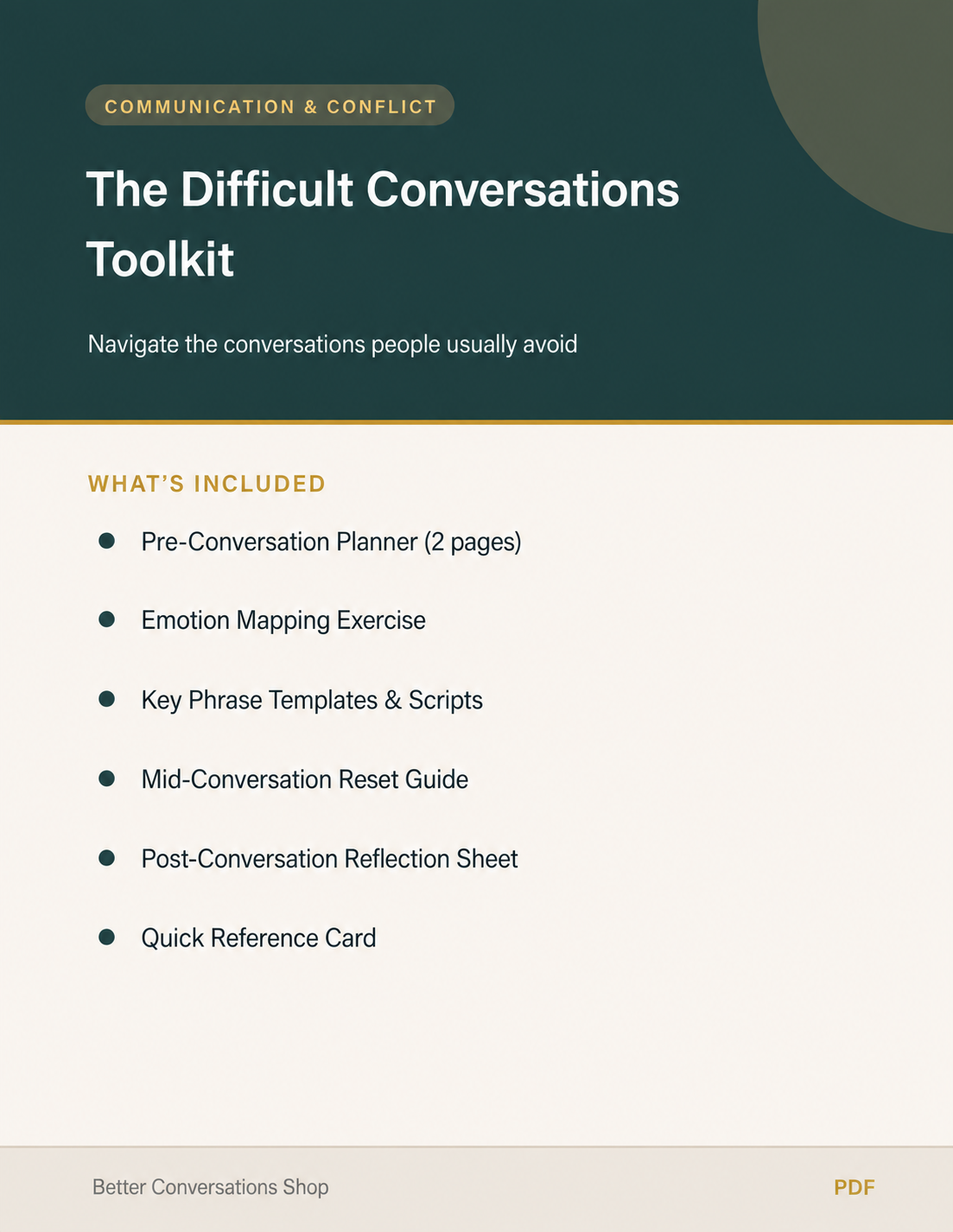
Next, define your objective. What do you want to happen as a result? Do you want the behavior to change? Do you want to understand their perspective? The Method Lab’s Difficult Conversations Toolkit includes a pre-conversation planner that walks you through this process, ensuring you stay focused during the actual conversation.
Manage your emotions before the meeting
Your emotional state directly affects how the conversation unfolds. If you’re angry or defensive, those emotions will leak into your tone and body language. Before your conversation, acknowledge what you’re feeling. Is this emotion helpful for this conversation? One practical technique: take five minutes before the meeting to write down what you’re feeling and why. This externalizes the emotion and helps you separate your feelings from the facts.
How to Deliver Negative Feedback Effectively
Negative feedback is the most common difficult conversation in the workplace, and it’s where leaders struggle most. Fear of conflict often leads managers to soften the message so much that it becomes unclear.
Structure your message for clarity
Effective negative feedback follows a clear structure:
- State the specific observable behavior. “In the client meeting yesterday, you interrupted three times when they were presenting their concerns.”
- Explain the impact. “When you interrupt, it signals that you’re not listening, and it made the client feel rushed and unheard.”
- Clarify the expectation going forward. “Going forward, I need you to listen without interrupting until the other person finishes their thought.”
- Offer support. “What would help you stay focused on listening instead of jumping in?”
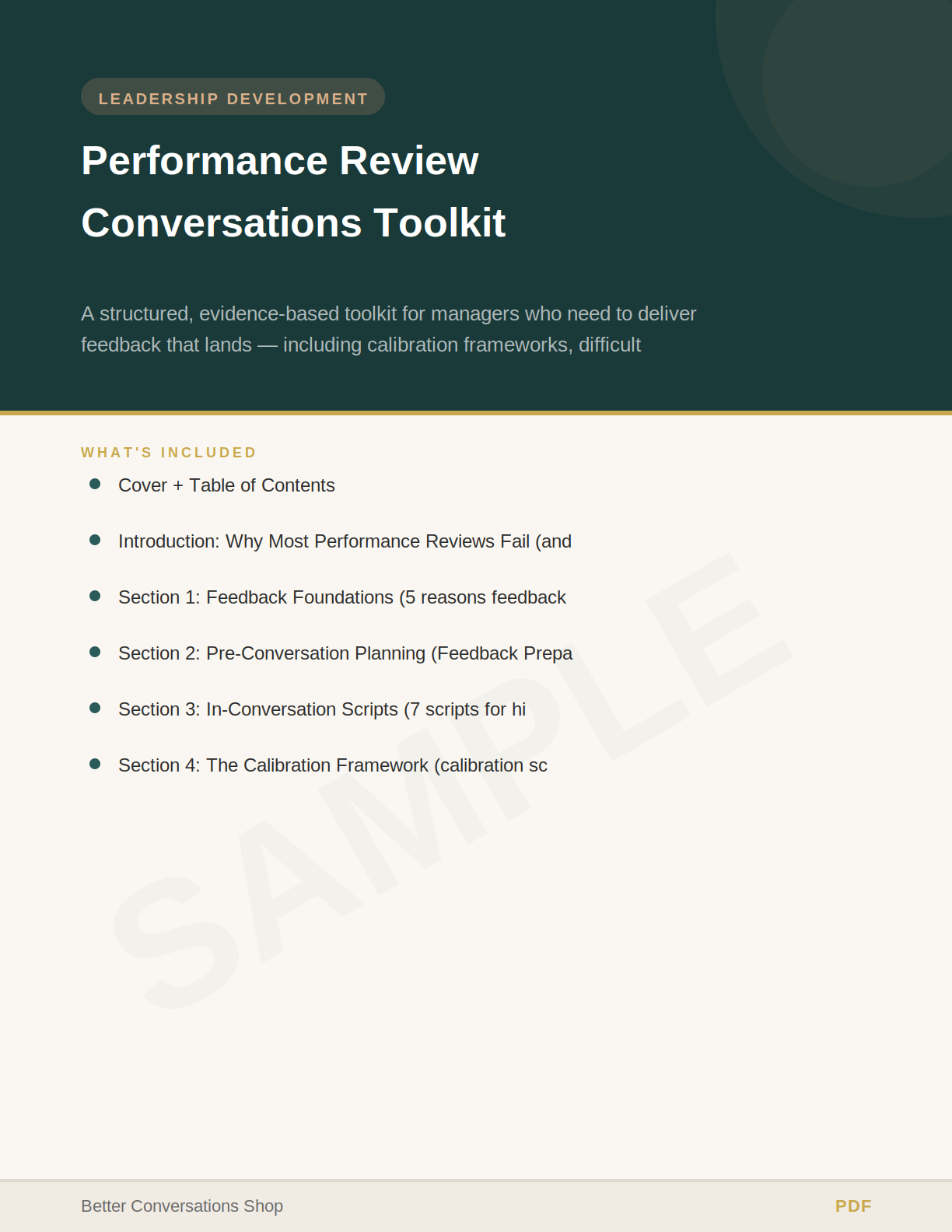
This structure removes ambiguity, separates behavior from character, clarifies what needs to change, and invites the other person into problem-solving. The Performance Review Conversations Toolkit from The Method Lab includes templates that structure feedback this way.
Focus on observable behavior, not character
This is where most difficult conversations go sideways. Leaders slip from describing behavior into making character judgments, and the conversation becomes personal instead of professional.
“You’re unreliable” is a character judgment. “You’ve missed three deadlines in the last month” is observable behavior. The first makes someone defensive. The second is something they can actually address. Here’s the test: Could a video camera capture what you’re describing? If yes, it’s observable behavior. If no, it’s interpretation.
Opening the Conversation Effectively
How you open a difficult conversation sets the tone for everything that follows. The most effective opening names the purpose clearly, acknowledges that it might be uncomfortable, and frames it as collaborative rather than punitive.
Example: “I want to talk about something that’s been on my mind, and I know it might feel uncomfortable. I’m bringing this up because I care about your success here, and I want to make sure we’re on the same page. Can we talk about what happened in the client presentation?”
The key is directness without aggression. Vague openings create anxiety. Direct openings feel respectful: “I want to talk about your performance on the Johnson project” or “I need to address what happened in the meeting yesterday.”

Difficult Conversation Scripts for Managers
Scripts give you language when your mind goes blank under stress and help you stay focused on what matters. These aren’t word-for-word scripts to memorize, they’re structures and language patterns to adapt to your style.
Script for performance issues
Opening: “I want to talk about your performance on the Q3 project. I’ve noticed some patterns I want to address because I think you’re capable of better work, and I want to help you get there.”
Specific observation: “You missed the mid-project check-in deadline, and the final deliverable had several gaps that the client flagged. That’s the second project in a row where this has happened.”
Impact: “When deadlines slip and quality suffers, it puts the team in a tight spot and affects how clients see us.”
Expectation: “Here’s what I need to see going forward: full completion of all check-in milestones on time, and I want you to do a self-review before submitting anything to me.”
Support: “What’s getting in your way? Are you unclear about the requirements? Do you need help with time management? Let’s figure out what support would help you succeed.”
Close: “I believe you can do this. I want to see you succeed in this role, and I’m here to help.”
Script for interpersonal conflict
Opening: “I’ve noticed some tension between you and [colleague name], and it’s starting to affect the team dynamic. I want to understand what’s happening and see if we can work through this together.”
Observation: “I’ve heard you both express frustration with each other, and I’ve noticed you’re not collaborating as closely as you used to on shared projects.”
Impact: “This tension affects the whole team. People feel like they have to choose sides, and it makes collaboration harder for everyone.”
Inquiry: “Help me understand what’s happening from your perspective. What’s the core issue here?”
Listen without interrupting. Then:
Reframe: “Okay, so from your perspective, [summarize what they said]. Is that right?”
Mutual accountability: “Here’s what I know: you both want to do good work, and you both care about the team. This conflict isn’t helping either of you. I need you both to commit to finding a way forward that’s professional and respectful.”
Concrete next step: “I’d like the three of us to meet together next week. We’ll talk about what needs to happen for you to work together effectively. Are you willing to do that?”
Script for remote and hybrid settings
Remote work adds complexity to difficult conversations. You lose body language cues, tone is easier to misinterpret, and people feel more vulnerable on video.
Opening (video call): “I want to talk about something that’s important, and I want to do this on a call so we can see each other. This isn’t a firing or anything catastrophic, I just think this conversation matters enough that I want to talk face-to-face rather than over email.”
Preamble: “I know these conversations feel awkward on video. I want you to know that I’m not angry, and I’m not trying to ambush you.”
Specific situation: “I noticed that your last three Slack messages to the design team had a sharp tone. I want to understand what’s going on, because that’s not typical for you.”
Open inquiry: “What’s happening on your end? Is there something going on that I should know about?”
Listen. Then:
Clarify intent: “I’m not saying you’re a bad person. I’m saying that in this specific situation, the tone didn’t land well. Help me understand what was going on.”
Collaborative close: “I think you care about quality and probably felt frustrated about something. The challenge is that when frustration comes through in writing, it reads harsher than you intend. Can we find a way for you to express that frustration more directly, maybe a quick call instead of a Slack message?”
In remote settings, be more explicit about your intent and more deliberate about inviting dialogue.
Conflict Resolution Strategies for Leaders
Not all difficult conversations are about feedback. Some are about resolving conflict between people or addressing situations where multiple perspectives collide.
Use active listening to defuse tension
The instinct in conflict is to defend, explain, or convince. Active listening does the opposite, it creates space for the other person to feel heard, which makes them more open to your perspective.
Active listening means you’re genuinely trying to understand the other person’s position, even if you disagree. Reflect back what you heard before responding: “So what I’m hearing is that you felt excluded from the decision-making process, and you didn’t feel like your concerns were taken seriously. Is that right?”
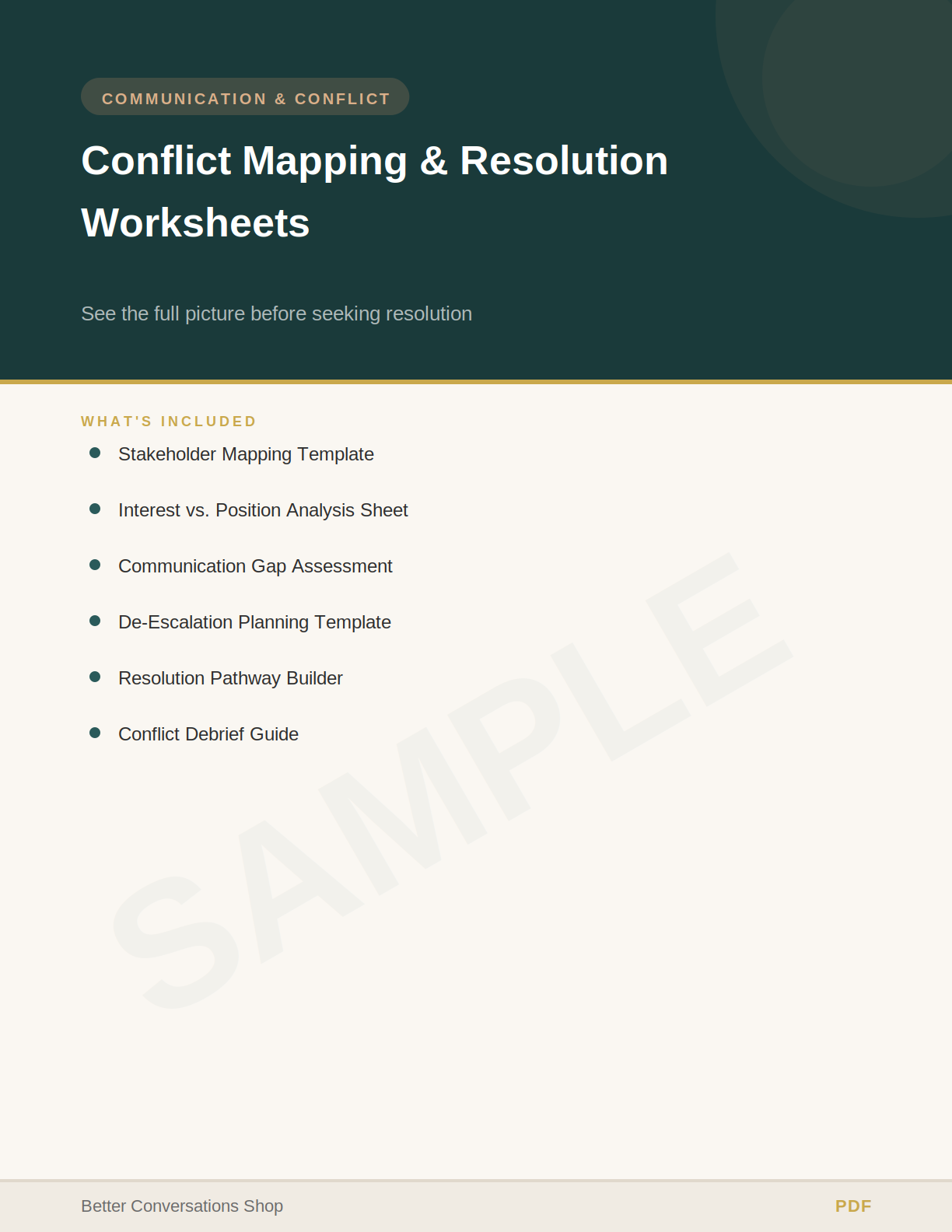
This shows the other person you’re listening and often defuses anger because people feel heard. Once someone feels heard, they’re more willing to listen to your perspective. The Conflict Mapping & Resolution Worksheets from The Method Lab include structured tools for understanding conflict dynamics before jumping to solutions.
Navigate power dynamics and hierarchy
Power dynamics shape every difficult conversation. If you’re the manager, you have structural power. The person you’re talking to might feel like they can’t push back because you control their paycheck and schedule.
Acknowledging this directly changes the dynamic: “I know there’s a power difference between us here. I’m your manager, and that might make it harder for you to say what you really think. I want you to know that I’m genuinely interested in understanding your perspective, even if it’s critical of me or the decision I made.”

As a leader, you can shift dynamics by explicitly inviting diverse perspectives: “I want to hear from everyone here, especially if you disagree with what’s been said. I want to know what I’m missing.” Then actually listen when people speak up.
Common Mistakes to Avoid
Most leaders make the same mistakes when navigating difficult conversations.
Softening the message so much that it becomes unclear. You want to be kind, so you bury the actual feedback under so much context that the other person doesn’t understand what needs to change.
Making it personal. “You’re disorganized” versus “You’ve missed three deadlines in the last month.” One is a character attack; one is a description of behavior.
Not listening. You’ve already decided what the problem is. You’re not actually curious about the other person’s perspective.
Bringing up old issues. “This is just like what happened last year when…” Now you’re relitigating the past instead of solving the current problem.
Letting emotions drive the conversation. Your tone becomes sharp, your language becomes accusatory, and the other person goes defensive. If you’re too activated, reschedule.
Not following up. You have the conversation, and then nothing changes. Real change happens through multiple conversations over time.
|
Mistake |
What It Looks Like |
How to Fix It |
|---|---|---|
|
Unclear feedback |
Burying the actual issue under hedging and context |
State the specific behavior and impact directly in the first minute |
|
Character attacks |
“You’re disorganized” or “You’re not a team player” |
Describe observable behavior instead: “You’ve missed three deadlines” |
|
Not listening |
You’ve decided what’s wrong and what needs to happen |
Ask genuine questions and listen to the answer without planning your response |
|
Bringing up history |
“This is just like last year when…” |
Stay focused on the current situation |
|
Emotional reactivity |
Your tone is sharp, your language is accusatory |
Manage your emotional state before the conversation |
|
No follow-up |
You have the conversation and then nothing changes |
Schedule a check-in to see how things are progressing |
Conclusion
Difficult conversations at work are uncomfortable, but they’re where real leadership happens. The ability to navigate these conversations with clarity, empathy, and structure is what separates managers who build trust from those who create distance.
The Method Lab’s suite of conversation tools, including the Difficult Conversations Toolkit and the Performance Review Conversations Toolkit, provides the frameworks and templates that take the guesswork out of high-stakes interactions. With structured preparation, specific language patterns, and conflict resolution strategies, you can transform difficult conversations from something you dread into something that strengthens your relationships and your team’s psychological safety.
Start with preparation. Define your objective, manage your emotions, and structure your message. Then open with directness and invite collaboration.
Society for Human Resource Management guidance on difficult workplace conversations
Harvard Business Review research on emotional intelligence in leadership
Center for Creative Leadership on conflict resolution and communication skills
Frequently Asked Questions
How do you initiate a difficult conversation without causing defensiveness?
Start with genuine intent and psychological safety. Use objective observation rather than judgment: 'I noticed the project deadline was missed' instead of 'You dropped the ball.' Request a private, unrushed setting. Signal that the conversation is collaborative, not punitive. Frame it as problem-solving together, not accusation. Your tone of voice and body language matter as much as your words—stay calm and non-defensive yourself. This foundation prevents the other person from immediately shutting down.
What are the key steps to handle difficult conversations at work effectively?
Prepare first: clarify your core issue, manage your emotions, and define measurable outcomes. Open with direct communication and empathy. Use active listening—let the other person fully respond before countering. Stay focused on specific behaviors and impact, not character. Manage the emotional temperature by staying professional and respecting boundaries. Close with clear next steps and accountability. The Difficult Conversations Toolkit provides a pre-conversation planner and emotion mapping exercise to guide you through each phase.
How do power dynamics affect difficult conversations between managers and direct reports?
Power imbalances create psychological barriers. Employees often filter their responses to avoid career risk, so they may agree without truly being heard. Mitigate this by explicitly inviting honest feedback, acknowledging the power dynamic openly, and ensuring the employee knows the conversation is safe. Ask clarifying questions and demonstrate that you value their perspective. Avoid using authority to close the conversation prematurely. Create psychological safety so the person feels comfortable raising concerns or disagreement without fear of retaliation.
What's the difference between delivering feedback and having a difficult conversation?
Feedback is one-directional advice; a difficult conversation is bidirectional dialogue. Feedback tells someone what to change; a conversation explores why, seeks to understand context, and builds mutual agreement on solutions. Difficult conversations address interpersonal dynamics, conflict, or high-stakes performance issues that require collaboration to resolve. The Conflict Mapping & Resolution Worksheets help you understand stakeholder interests and positions before moving to solutions, ensuring the conversation becomes a true dialogue rather than a one-way correction.