Table of Contents
- Why Your First 90 Days Define Your Leadership
- Phase 1: Listen, Learn, and Map Stakeholders (Days 1-30)
- Phase 2: Build Alliances and Secure Managerial Quick Wins (Days 31-60)
- Create Your 30-60-90 Day Plan for Managers
- Phase 3: Establish Leadership and Direction (Days 61-90)
- New Manager Onboarding Checklist
- First 90 Days Manager Goals Examples
- Common Mistakes to Avoid in Your First 90 Days
- How The Method Lab Supports Your First 90 Days
- Frequently Asked Questions
Last Updated: August 23, 2026
Why Your First 90 Days Define Your Leadership
Your first 90 days as a manager are not a trial period, they’re a foundation-setting sprint that determines whether your team trusts you, whether leadership sees you as ready for bigger responsibilities, and whether you’ll succeed in the role. New managers who establish credibility early outperform those who don’t by a measurable margin (peer-reviewed research). But credibility isn’t built through grand gestures or sweeping changes. It’s built through deliberate listening, strategic early wins, and clarity about what matters most in your specific context.
This guide walks you through a structured approach: deep listening in month one, alliance-building and quick wins in month two, and direction-setting in month three. Each phase has a specific purpose and builds on the last. The framework applies whether you’re stepping into your first management role or moving to a new company as an experienced leader.

Phase 1: Listen, Learn, and Map Stakeholders (Days 1-30)
Your first instinct as a new manager will be to prove yourself. Resist it. The highest-use move in your first 30 days is to listen more than you talk.
Conduct Listening Tours with Key Stakeholders
Schedule one-on-one conversations with 15-20 people in your first month: direct reports, peers, your boss, and key stakeholders from other departments. Aim for 30-45 minute conversations, not status updates (shrm.org).
Come with genuine questions, not a prepared pitch:
- “What’s working well in this team right now?”
- “What’s the biggest frustration you experience?”
- “If you were in my role, what would you focus on first?”
- “What’s something I should know about how things really work here?”
Document patterns, not just individual opinions. After 10-15 conversations, themes will emerge. These patterns are your signal. Don’t use these conversations to announce your vision, you don’t have enough context yet.
Assess Organizational Culture and Unwritten Rules
Every organization has two cultures: the one described in the values statement and the one that actually exists. Pay attention to how decisions get made, what gets celebrated, what gets tolerated, who has influence, what’s considered a win, and how people handle failure. These patterns reveal what your team actually values and show you where you have flexibility to make changes.
Phase 2: Build Alliances and Secure Managerial Quick Wins (Days 31-60)
Month two is where you shift from listening to acting. You’ve gathered context. Now you use it strategically.
Identify and Execute Early Wins
An early win is a problem you can solve in 30-45 days that will be visibly valuable to your team and organization. It’s not a major strategic initiative, it’s something concrete, achievable, and meaningful.
The criteria for a good early win:
- It’s something your team has been asking for or struggling with
- It’s within your authority to fix
- It will be completed within 30-45 days
- It will be visible to your team and ideally to leadership
- It demonstrates that you listen and can execute
The purpose is to build trust and show your team that you’re paying attention, can follow through, and will take action on their behalf. Choose something valuable to your team, not personally interesting to you.
Build Internal Alliances Across Departments
Your success depends on people outside your direct control. Schedule follow-up conversations with influential stakeholders from month one. Be direct about what you’re trying to accomplish and where you need their help.
Position yourself as someone who understands how the organization works, respects other departments’ constraints, delivers on commitments, and asks for help rather than demanding it. Build these alliances before you need them.
Create Your 30-60-90 Day Plan for Managers
A 30-60-90 day plan for managers is a working framework that keeps you focused on what matters most in each phase.
Define Success Metrics and Key Priorities
Work backward from your boss’s priorities. What does your boss care about? Where is there pressure or opportunity? Your priorities should ladder up to those.
Define 3-5 key priorities for the full 90 days. For each priority, define a specific, measurable outcome. “Improve team morale” is not a metric. “Reduce voluntary attrition from 18% to 12%” is (bls.gov).
Set Strategic Alignment with Organizational Goals
Map each of your key priorities to an organizational goal. How does your work enable the company’s strategy? This alignment reveals where you might have authority you didn’t realize and helps you make trade-off decisions.
Phase 3: Establish Leadership and Direction (Days 61-90)
By day 61, you’ve listened, built alliances, and proven you can execute. Now you establish your leadership direction.

Develop Your Management Style and Executive Presence
Clarify your beliefs about leadership: How do you want to be perceived? What kind of leader do you want to be? What values should your team operate from? How will you balance being approachable with being authoritative?
Build executive presence by speaking up in meetings with a clear point of view, communicating about your team’s impact in business terms, following through on commitments, being honest about what you don’t know, and asking thoughtful questions that show you understand the business.
Create Your Leadership Operating Rhythm
Your operating rhythm is the cadence of how you work: one-on-ones with direct reports, team meetings, skip-level conversations with your boss, and how you handle communication and decision-making. A clear operating rhythm reduces friction and builds trust.
Define one-on-one frequency (weekly 30-minute one-on-ones are standard), team meeting structure, how you handle urgent decisions, communication norms, and how feedback flows. The rhythm should reflect your management style and your team’s needs.
New Manager Onboarding Checklist
|
Activity |
Timeline |
Owner |
Status |
|---|---|---|---|
|
Schedule listening tour conversations (15-20 people) |
Days 1-20 |
You |
|
|
Document cultural patterns and unwritten rules |
Days 20-30 |
You |
|
|
Identify and launch first early win |
Days 31-45 |
You + team |
|
|
Build relationships with key cross-functional partners |
Days 31-60 |
You |
|
|
Define 30-60-90 day priorities and success metrics |
Days 30-40 |
You + boss |
|
|
Clarify organizational strategic alignment |
Days 40-50 |
You + boss |
|
|
Establish one-on-one rhythm with direct reports |
Days 1-10 |
You |
|
|
Communicate management style and expectations to team |
Days 50-60 |
You |
|
|
Create leadership operating rhythm |
Days 55-70 |
You |
|
|
Conduct 30-day check-in with your boss |
Day 30 |
You + boss |
|
|
Conduct 60-day progress review |
Day 60 |
You + boss |
|
|
Communicate 90-day progress and next quarter focus |
Day 90 |
You + team + boss |
First 90 Days Manager Goals Examples
Example 1: New Manager in a Scaling Startup
- By day 30: Complete listening tours with 18 stakeholders and document three key process improvements
- By day 60: Implement one cross-functional workflow improvement that reduces project cycle time by 20%
- By day 90: Establish team operating rhythm with weekly one-on-ones, bi-weekly team meetings, and monthly all-hands; achieve 80% team engagement on engagement survey
Example 2: New Manager in a Corporate Environment
- By day 30: Understand organizational decision-making structure and identify three strategic priorities aligned with department goals
- By day 60: Build relationships with peers in finance, operations, and marketing; secure budget approval for one team initiative
- By day 90: Deliver quarterly business review with clear team metrics, progress on strategic priorities, and plan for next quarter
Example 3: New Manager Transitioning from Individual Contributor
- By day 30: Establish credibility with team through listening; identify one quick win that demonstrates you understand team challenges
- By day 60: Execute first team project using your new management approach; gather feedback from team on your leadership style
- By day 90: Develop each direct report’s growth plan; clarify your expectations for performance and collaboration
Common Mistakes to Avoid in Your First 90 Days
Mistake 1: Announcing Your Vision Too Early
Announcing your vision before you understand the context is how you lose credibility. Wait until day 60 or beyond to articulate a clear direction. By then you’ll have context, alliances, and credibility to ask for change.
Mistake 2: Trying to Be Friends with Your Team
You can be warm, approachable, and genuine. You can’t be their peer. The relationship has changed. Acknowledge it and be clear about your role.
Mistake 3: Making Big Changes Before You Have Credibility
Don’t reorganize the team in month one or make sweeping decisions about processes or priorities. Small, visible wins build credibility. Then you use that credibility for bigger changes.
Mistake 4: Neglecting Your Relationship with Your Boss
Schedule regular check-ins. Ask for feedback. Be honest about what you don’t know. Managers who stay in sync with their boss navigate the first 90 days much more smoothly.
Mistake 5: Skipping the Hard Conversations
If someone on your team isn’t performing, address it early. If there’s a cultural issue, name it. Avoiding hard conversations doesn’t make you likable. It makes you ineffective.
How The Method Lab Supports Your First 90 Days
Managers who use structured onboarding frameworks and have clear 30-60-90 day plans can achieve their performance targets faster. The structure matters because it forces prioritization and clarity.
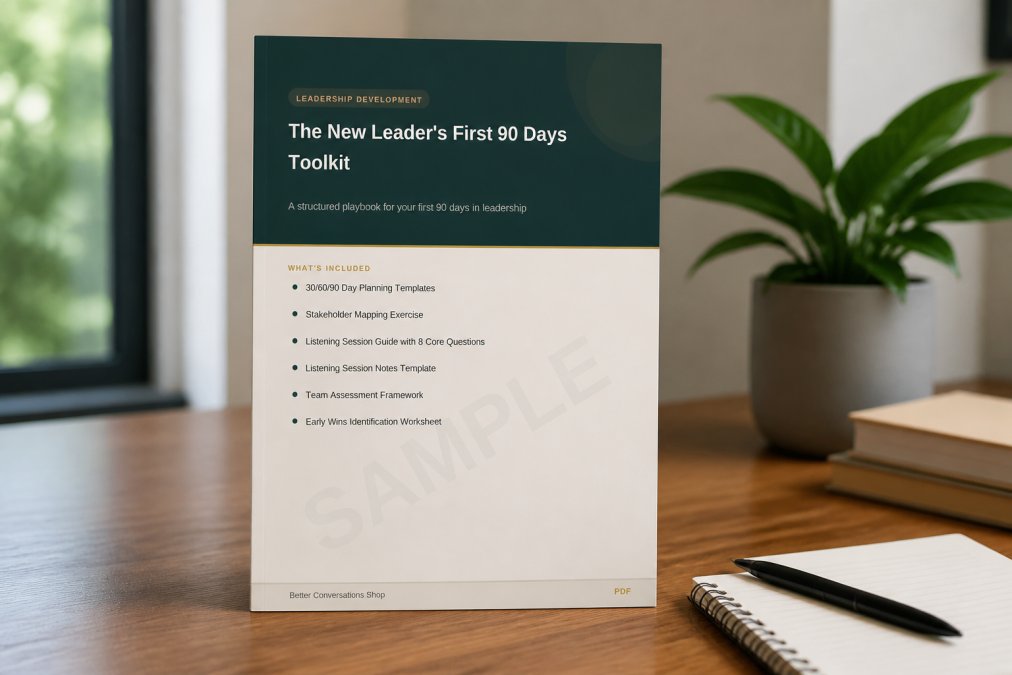
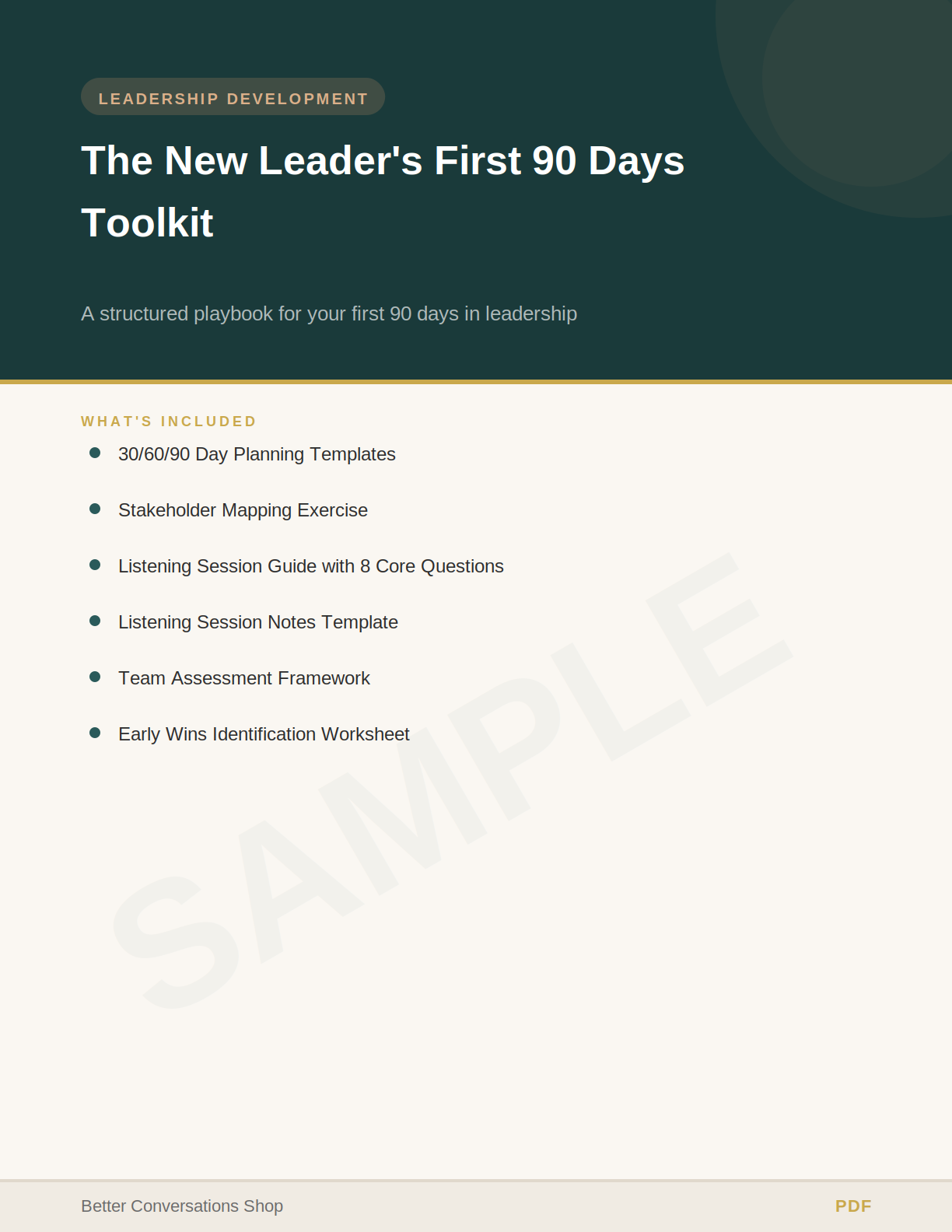
The Method Lab’s New Leader’s First 90 Days Toolkit walks you through listening tours, stakeholder mapping, early win identification, and leadership direction-setting. It includes conversation guides, a stakeholder mapping template, a 30-60-90 day planning worksheet, and a leadership operating rhythm template.
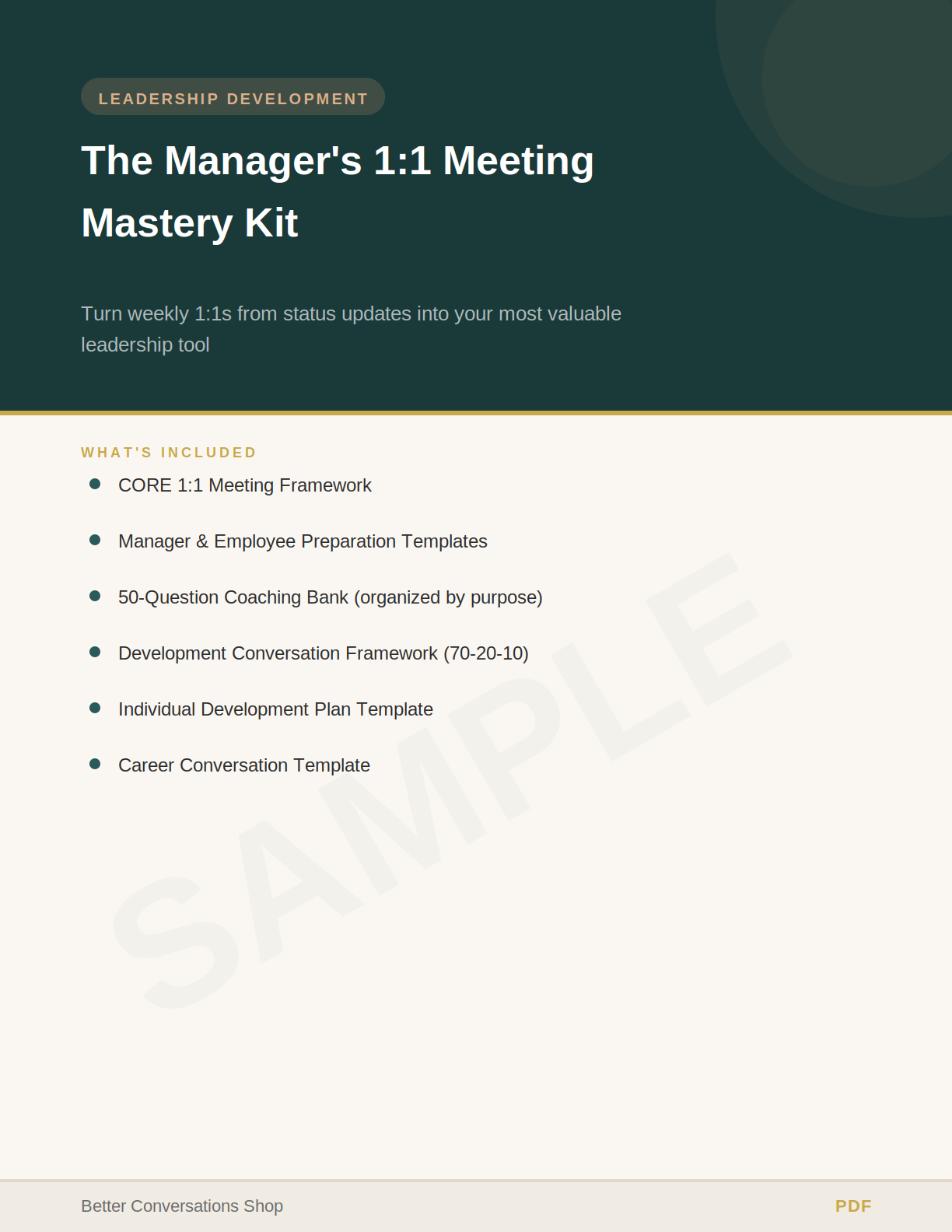
Beyond the first 90 days, the Manager’s 1:1 Meeting Mastery Kit transforms one-on-ones from status updates into development conversations. The Performance Review Conversations Toolkit gives you structure for feedback conversations that actually change behavior.
Your first 90 days as a manager are an investment in your long-term success. The time you spend listening, building alliances, and establishing clarity will determine how effective you are for the next two years. Start with listening. Move to action. End with clarity. Get your free toolkit and start building your 90-day plan today.
Frequently Asked Questions
Q: What should a new manager prioritize in their first 90 days?
A: Focus on three core areas: building credibility through listening and learning your organization’s culture, securing early wins that demonstrate competence, and establishing strategic alignment with organizational goals. Avoid the trap of making sweeping changes immediately. Instead, spend the first 30 days gathering information, the next 30 executing visible wins, and the final 30 establishing your leadership direction and operating rhythm.
Q: How do you structure a 30-60-90 day plan for managers?
A: A 30-60-90 day plan for managers divides your transition into three phases. Days 1-30 focus on listening, stakeholder mapping, and cultural assessment. Days 31-60 emphasize building alliances and securing quick wins that build credibility. Days 61-90 concentrate on establishing direction, finalizing your leadership operating rhythm, and setting strategic priorities. Define specific, measurable goals for each phase tied to organizational outcomes.
Q: What are the biggest mistakes new managers make in their first 90 days?
A: Common mistakes include moving too fast without understanding the culture, failing to build stakeholder relationships before making decisions, setting unrealistic goals without input, and neglecting feedback loops with your team. Many new managers also underestimate the importance of managing up and forget to establish clear communication norms. Avoid these by prioritizing listening first, securing quick wins early, and creating psychological safety within your team.
Q: How can a new manager build credibility in their first month?
A: Build credibility by conducting listening tours with key stakeholders, following through on small commitments, and asking thoughtful questions before offering solutions. Show respect for existing processes while identifying areas for improvement. Demonstrate competence through preparation, clarity in communication, and willingness to learn. Establish yourself as reliable and trustworthy by being consistent, transparent about what you don’t know, and responsive to team needs.
Q: What’s the difference between a new manager onboarding checklist and a 30-60-90 day plan?
A: A new manager onboarding checklist covers logistical and administrative tasks: setting up systems access, scheduling key meetings, understanding policies, and learning organizational structure. A 30-60-90 day plan is strategic and outcome-focused, defining leadership goals, stakeholder relationships, early wins, and cultural integration across three phases. Use the checklist to ensure nothing falls through the cracks; use the plan to guide your leadership strategy and demonstrate impact.
Q: How do you manage stakeholder expectations in your first 90 days?
A: Set clear expectations early by communicating your listening and learning phase (days 1-30) so stakeholders understand you won’t make immediate changes. Share your initial observations and early wins (days 31-60) to demonstrate progress and build confidence. By day 60, communicate your strategic direction and long-term vision so stakeholders understand where you’re headed. Create feedback loops and regular check-ins to manage expectations throughout, especially with your direct manager.
Q: What resources can help me execute my first 90 days successfully?
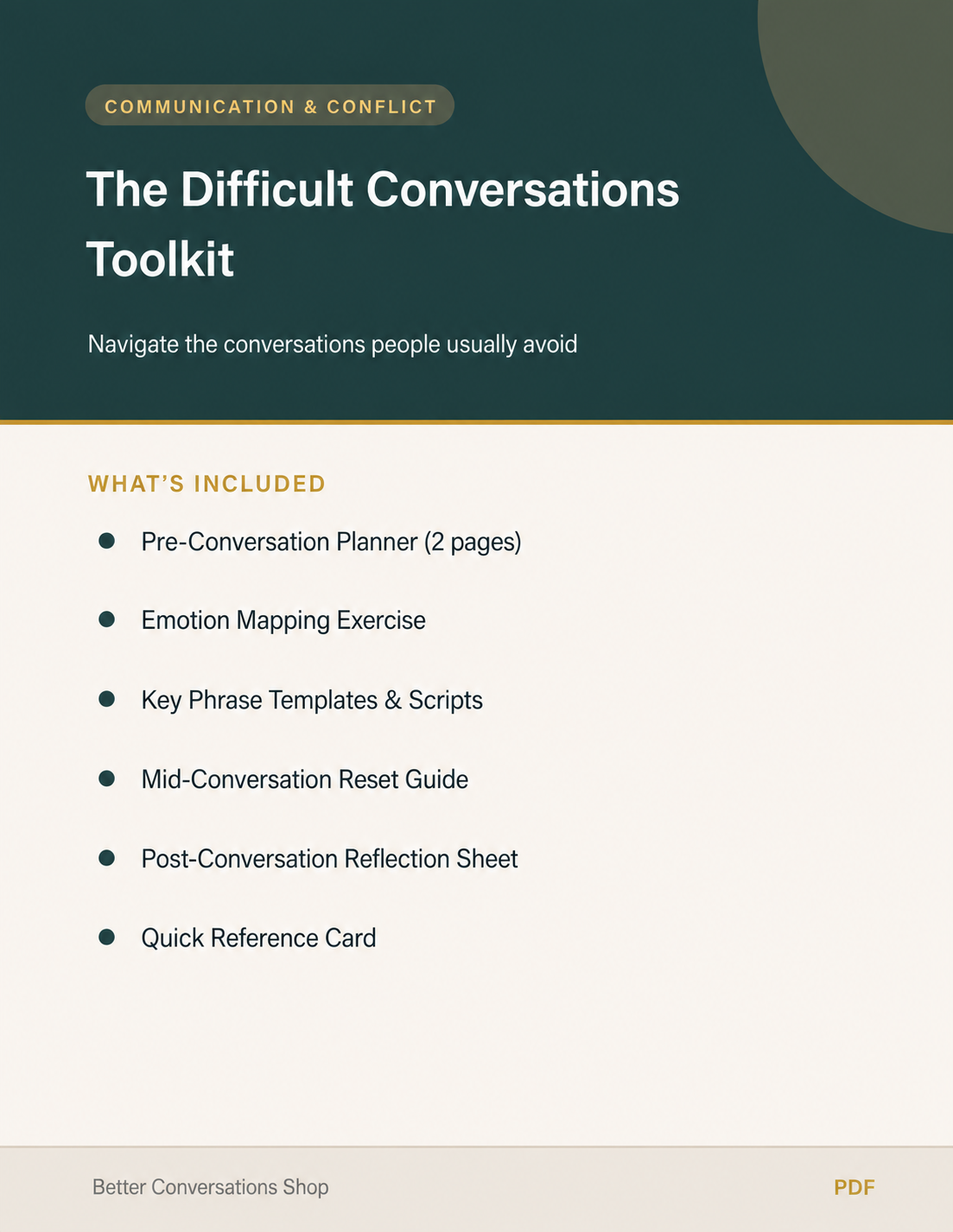
A: The Method Lab’s New Leader’s First 90 Days Toolkit provides structured frameworks for every phase: stakeholder mapping templates, early wins identification worksheets, and leadership operating rhythm guides. The Manager’s 1:1 Meeting Mastery Kit helps you build relationships and gather feedback through high-leverage conversations. The Difficult Conversations Toolkit prepares you for sensitive discussions. These tools transform theory into actionable steps, reducing anxiety and accelerating credibility-building in your transition.