
Table of Contents
- Step 1: Recognize the Signs of Robotic Coaching in Professional Settings
- Step 2: Understand the AI Coaching Limitations That Make Human Presence Non-Negotiable
- Step 3: Master the Coaching Skills AI Cannot Replicate
- Step 4: Prioritize Building Rapport in Coaching Before Jumping to Solutions
- Step 5: Use Structure Without Sounding Like a Script
- Step 6: Apply Ethical AI in Coaching to Enhance, Not Replace, Human Judgment
- Step 7: Avoiding Robotic Coaching in High-Stakes Conversations
- Conclusion
Last Updated: July 31, 2026
Avoiding robotic coaching in professional settings is one of the most persistent challenges facing coaches, managers, and leadership consultants today. The Method Lab works with coaches and leaders who consistently report the same frustration: they follow a framework perfectly, hit every checkpoint, and still walk out of a session feeling like they ran a checklist rather than had a conversation. Below, we’ll show you exactly how to close that gap, covering the specific skills, habits, and mindset shifts that separate coaching that changes behavior from coaching that just fills calendar time.
Here’s what most guides get wrong: they treat robotic coaching as a tool problem. It isn’t. It’s a presence problem.
Step 1: Recognize the Signs of Robotic Coaching in Professional Settings
Robotic coaching is the pattern of delivering structured coaching interactions in a way that prioritizes process over connection, leaving the person being coached feeling processed rather than heard. Recognizing this pattern is the first step toward correcting it.
What Robotic Coaching Looks Like in Practice
The clearest sign is predictability. When a coachee can anticipate your next question before you ask it, you’ve crossed from structured into scripted. Other indicators include:
- Asking follow-up questions that don’t track with what was just said
- Moving to the next framework stage before the current one has landed
- Using the same phrases across every session regardless of context
- Filling silences immediately instead of letting insight settle
- Summarizing what someone said without reflecting what it meant
A common mistake is confusing frequency of questions with quality of listening. Coaches who ask question after question without processing the answers are performing engagement rather than practicing it.
Why Frameworks Alone Can Make Coaching Feel Scripted
Frameworks are essential. The problem is when they become a script rather than a scaffold. A scaffold supports the conversation from underneath; a script replaces it.
The GROW model, structured feedback models, and similar tools are designed to guide thinking, not dictate sequence. Coaches who apply them rigidly often jump to the “Options” phase before the coachee has fully articulated the “Reality.” The result is advice that feels generic because it was built on an incomplete picture.
Structure should be invisible to the coachee. If they can see the framework operating, the framework is too prominent.
Step 2: Understand the AI Coaching Limitations That Make Human Presence Non-Negotiable
AI coaching tools are increasingly present in professional development programs, and they offer genuine utility for skill practice, reflection prompts, and session preparation. But understanding AI coaching limitations is critical before deciding where these tools fit.
AI coaching tools cannot read hesitation. They cannot notice that someone answered a question quickly but shifted their posture. They cannot sit with discomfort in a way that signals “I’m still here, keep going.” According to International Coaching Federation’s research on coaching effectiveness, the quality of the coaching relationship is one of the strongest predictors of client outcomes. That relationship is built through human responsiveness, not algorithmic prompting.
AI tools also lack contextual memory in the way humans carry it. A skilled coach remembers that three sessions ago a client mentioned a difficult relationship with their VP, and connects that to what’s surfacing today. That connective tissue is what makes coaching feel coherent over time.
The appropriate role for AI in coaching is preparation and documentation, not presence. Use it to draft session agendas, capture notes, or generate reflection prompts. Keep the conversation itself human.
Step 3: Master the Coaching Skills AI Cannot Replicate
The coaching skills AI cannot replicate share a common thread: they require real-time, embodied responsiveness to another human being. These are not soft skills in the dismissive sense. They are high-precision capabilities that take deliberate practice to develop.
Active Listening Beyond the Surface
Active listening in coaching is not just restating what someone said. It is tracking the gap between what someone says and what they mean, then making that gap visible in a way that opens rather than closes the conversation.
The practical difference looks like this:
- Surface listening: “So you’re saying you feel overwhelmed by the project scope.”
- Deeper listening: “You described the project scope in detail, but I noticed you paused before mentioning your team. What’s happening there?”
The second response follows the energy, not just the content. That distinction is where insight lives.
Reading the Room: Tone, Body Language, and Emotional Cues
Coaching happens in context. A coachee who arrives five minutes late, sits with arms crossed, and answers in clipped sentences is communicating something before they’ve said a word. Skilled coaches name these cues with curiosity, not accusation.
Try: “You seem like you came in carrying something today. Do you want to start there, or is there something specific you wanted to work on?”
That single question does more than any framework stage because it meets the person where they actually are.
Harvard Business Review’s research on emotional intelligence in leadership consistently identifies the ability to read and respond to emotional cues as a differentiating factor in leadership effectiveness. For coaches, it is the foundation everything else rests on.
Step 4: Prioritize Building Rapport in Coaching Before Jumping to Solutions
Building rapport in coaching is not a warm-up exercise you do for three minutes before the real work starts. It is the real work. Rapport is the condition under which honest conversation becomes possible, and without it, even the best framework produces surface-level answers.

The most common failure pattern: coaches who are well-trained in frameworks rush to the diagnostic phase because that’s where they feel competent. The coachee hasn’t yet decided whether to trust the coach with the real problem. So they present a proxy problem, the coach addresses it skillfully, and both parties leave feeling vaguely unsatisfied.
Rapport-building behaviors that actually work in professional settings:
- Remembering and referencing specific details from previous conversations
- Asking about the context around the issue, not just the issue itself
- Naming what you’re observing without interpreting it
- Being willing to sit with ambiguity rather than rushing to reframe
Step 5: Use Structure Without Sounding Like a Script
The goal is not to abandon structure. Structure is what separates professional coaching from a supportive chat. The goal is to carry structure internally while expressing it externally as genuine curiosity.
|
Common Mistake |
What It Sounds Like |
What to Do Instead |
|---|---|---|
|
Announcing the framework stage |
“Now let’s move to the Options phase” |
Ask an options question without labeling it |
|
Using the same transition phrase |
“That’s great. So what would you like to do about that?” |
Vary your language based on what was just said |
|
Skipping emotional acknowledgment |
Moving straight to problem-solving |
Reflect the feeling before exploring the solution |
|
Over-summarizing |
Restating every answer before the next question |
Summarize only when it adds clarity |
|
Filling every silence |
Asking a new question immediately |
Let the coachee sit with their own insight |
Common Mistakes to Avoid When Using Coaching Frameworks
The biggest trap is treating the framework as a contract with the coachee rather than a guide for yourself. When coaches say things like “We’ve covered the Goal and Reality, so now let’s look at Options,” they’ve made the framework visible and, worse, made the coachee feel like a subject in a process.
A related mistake is applying the same framework regardless of the session’s emotional temperature. Some conversations need to stay in the “Reality” phase for the entire session because that’s where the work is. Forcing movement through all four stages to feel complete is a coaching need, not a client need.
Step 6: Apply Ethical AI in Coaching to Enhance, Not Replace, Human Judgment
Ethical AI in coaching means using AI tools in ways that augment the coach’s capacity without substituting for the human relationship at the center of the work. This distinction matters more as AI tools become more sophisticated and more embedded in professional development programs.
Ethical use looks like: using an AI tool to generate reflection prompts a coach reviews and personalizes before a session, or using transcription software to capture session notes with the coachee’s explicit consent.
Unethical or harmful use looks like: deploying an AI chatbot to conduct coaching conversations with employees without disclosing the nature of the interaction, or using AI-generated behavioral assessments as coaching conclusions without human interpretation.
According to Society for Human Resource Management’s guidelines on AI in the workplace, transparency with employees about how AI tools are used in their development is an emerging standard of professional practice. Coaches and organizations that get ahead of this now will be better positioned as expectations solidify.
The practical rule: AI should make the human coach more prepared and more present, not less necessary.
Step 7: Avoiding Robotic Coaching in High-Stakes Conversations
High-stakes conversations are where robotic coaching causes the most damage. When a coachee is facing a performance issue, a significant career decision, or a conflict with a colleague, they need a coach who is fully present. A scripted response in these moments doesn’t just feel hollow; it erodes trust in ways that are difficult to repair.
Avoiding robotic coaching in professional settings matters most precisely when the stakes are highest. This is where preparation, presence, and practiced skill converge.
Performance Reviews That Change Behavior
Performance reviews fail when they become data delivery sessions. The manager reads from notes, the employee listens, both sign the form. Nothing changes because nothing was actually heard.
The Performance Review Conversations Toolkit from The Method Lab is built around a different premise: the conversation itself is the intervention. It provides a structured preparation framework that helps coaches and managers think through the emotional dynamics of the review before they walk into the room, so the structure supports the conversation rather than replacing it.
A performance review that changes behavior requires:
- A clear, specific behavioral observation (not a character judgment)
- A question that invites the employee’s perspective before the coach offers theirs
- Acknowledgment of what’s working before addressing what isn’t
- A co-created action step the employee actually believes in
- A follow-up mechanism that makes accountability feel supportive rather than punitive
1:1 Meetings That Build Trust Over Time
The 1:1 meeting is the highest-use leadership behavior available to managers, and also the most commonly wasted. Most managers run them as status updates. The employee reports on tasks; the manager nods; both move on.
Trust is built through consistency, curiosity, and the experience of being known. A 1:1 that asks “How are you tracking on the project?” builds compliance. A 1:1 that asks “What’s the hardest part of this work right now, and what would make it easier?” builds trust.
The Manager’s 1:1 Meeting Mastery Kit provides a practical system for transforming these meetings into genuine development conversations, including question banks, agenda templates, and frameworks for navigating difficult topics when they surface.
For coaches working with managers on this skill, the goal is to help them see the 1:1 not as a reporting mechanism but as the primary relationship-building tool they have available every week.
Robotic coaching doesn’t usually happen because coaches don’t care. It happens because structure, pressure, and habit crowd out presence. The solution isn’t to abandon frameworks; it’s to build the skills that make frameworks invisible. The Method Lab offers practical, client-ready tools including conversation guides, preparation frameworks, and structured playbooks designed to help coaches and leaders bring genuine presence to every high-stakes interaction. Get started with The Method Lab and build the coaching practice your clients actually need.
Frequently Asked Questions
What are the main limitations of AI in professional coaching?
AI coaching limitations include the inability to read emotional subtext, adapt to unspoken relational dynamics, or respond to a client's body language and tone in real time. AI tools can surface useful prompts and track progress, but they cannot hold space for vulnerability, challenge a client's blind spots with genuine intuition, or build the kind of trust that drives sustained behavioral change. Human coaches remain essential for high-stakes, emotionally complex coaching conversations.
We've tried structured conversation tools before and they felt robotic. How do you stay authentic while still being structured?
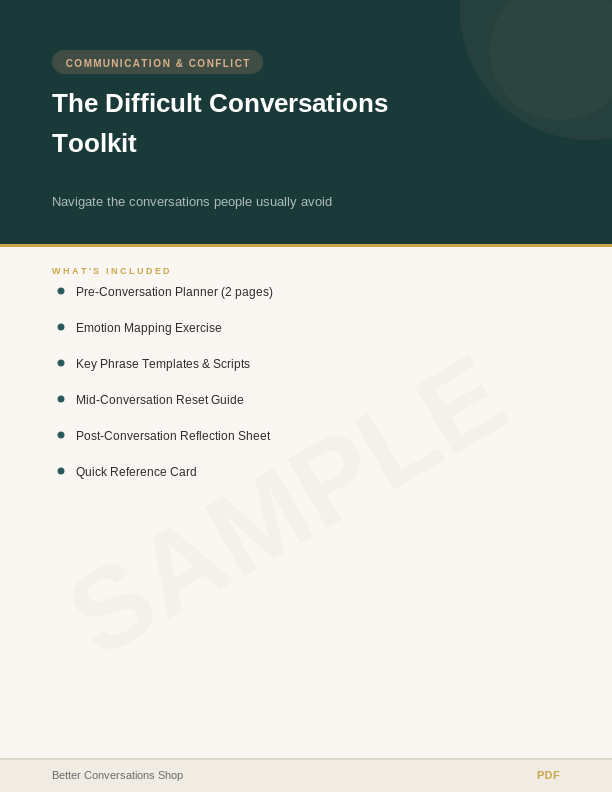
Avoiding robotic coaching while using frameworks comes down to how you enter the conversation, not just what you say. Structure should act as a backstage guide, not a front-of-house script. Internalize the framework before the session so your attention stays on the client, not the next question. Tools like The Method Lab's Difficult Conversations Toolkit are designed with this balance in mind — giving you a preparation scaffold so you can show up fully present, not heads-down in a checklist.
What coaching skills can AI not replicate?
The coaching skills AI cannot replicate include genuine empathy, intuitive silence, adaptive questioning based on emotional cues, and the ability to challenge a client in a way that feels safe rather than threatening. Building rapport in coaching also relies on micro-moments — a well-timed pause, a shift in tone, or acknowledging what a client didn't say. These are deeply human capabilities that no algorithm currently replicates with meaningful reliability in live professional settings.
What are the ethical considerations of using AI in coaching?
Ethical AI in coaching requires coaches to be transparent with clients about when AI tools are being used, ensure client data is protected under applicable privacy standards, and never allow AI outputs to substitute for professional judgment in sensitive situations. Coaches should position AI as a preparation and documentation aid, not a decision-maker. Maintaining human accountability for coaching outcomes — especially in high-stakes or emotionally charged engagements — is a core ethical responsibility for any professional coach.
Is a structured coaching toolkit overkill for a small team of five people?
Not at all — in fact, smaller teams often benefit more from structured tools because there is less margin for mishandled conversations. A poorly navigated 1:1 or performance review on a five-person team can affect the entire group dynamic. Resources like The Method Lab's Manager's 1:1 Meeting Mastery Kit ($23.99) and Performance Review Conversations Toolkit ($28.99) are designed to be immediately usable regardless of team size, without requiring large-scale implementation or retraining.